Why Your Tea Tastes Bitter How Water Temperature, Steeping Time, and Leaf Quantity Matter
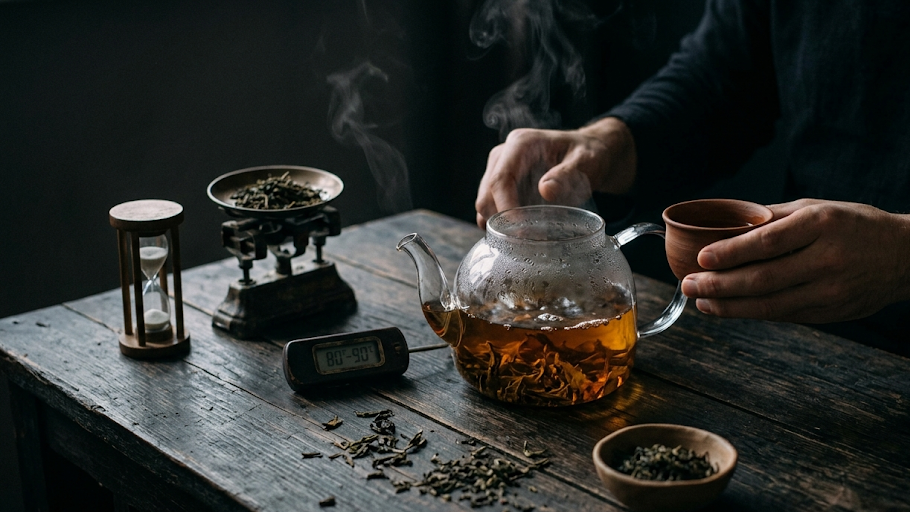
THE TEA BREWING NOTEBOOK / FLAVOR & TECHNIQUE Finding the Balance Behind a Better Cup of Tea Explore how heat, brewing time, and the amount of tea leaves influence extraction, bitterness, astringency, and the final flavor of your cup. WATER TEMPERATURE STEEPING TIME LEAF QUANTITY A cup of tea can be fragrant, smooth, refreshing, and … Read more

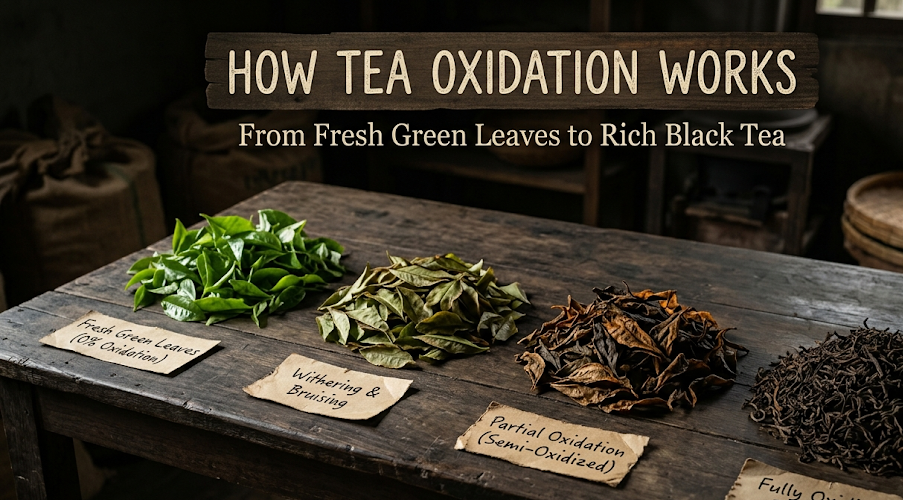
How Tea Oxidation Works From Fresh Green Leaves to Rich Black Tea

TEA SCIENCE / BOTANICAL PROCESSING From Fresh Leaves to Deep Amber Tea Explore the natural chemical reactions that transform freshly harvested tea leaves into the distinctive colors, aromas, and flavors of green, oolong, and black tea. CAMELLIA SINENSIS ENZYMATIC OXIDATION TEA PROCESSING A cup of delicate green tea and a cup of strong black tea … Read more

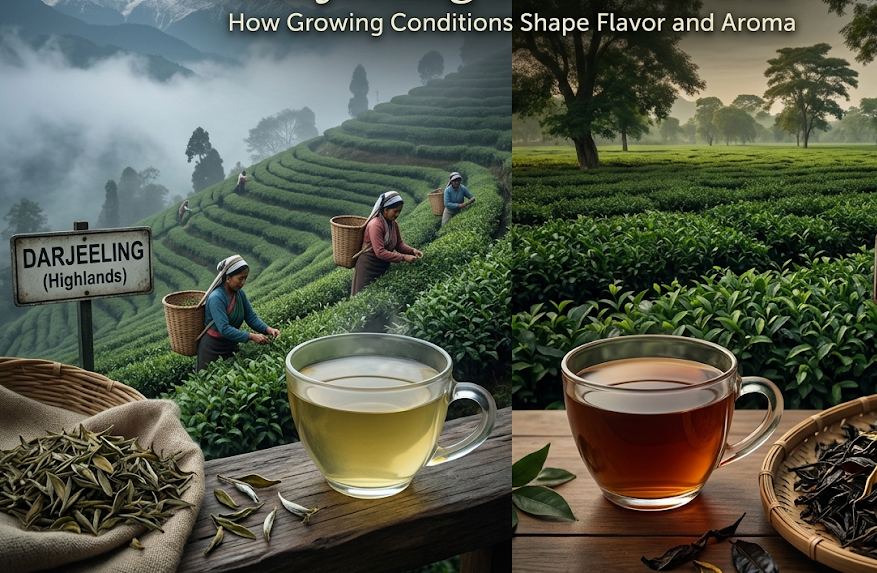
Darjeeling Tea How Growing Conditions Shape Flavor and Aroma

TEA TERROIR JOURNAL · ORIGIN & FLAVOR ❧ ☕ Two Tea Regions. Two Distinct Personalities. Discover why Darjeeling teas often taste delicate, floral, and complex, while Assam teas are celebrated for their rich body, malty character, and satisfying strength. DARJEELING HIGHLANDS ASSAM VALLEY TEA TASTING Two cups of black tea can look surprisingly similar while … Read more

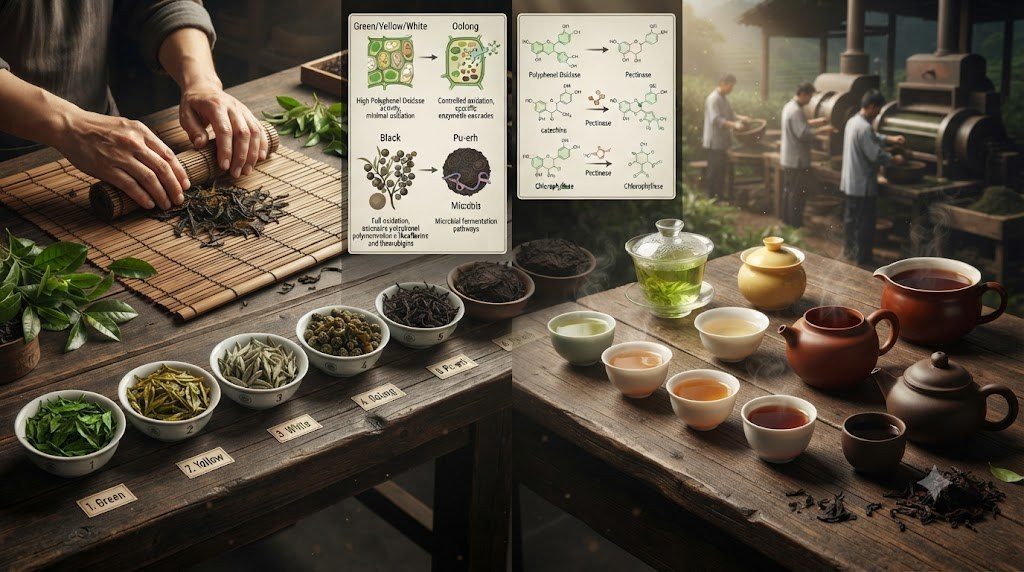
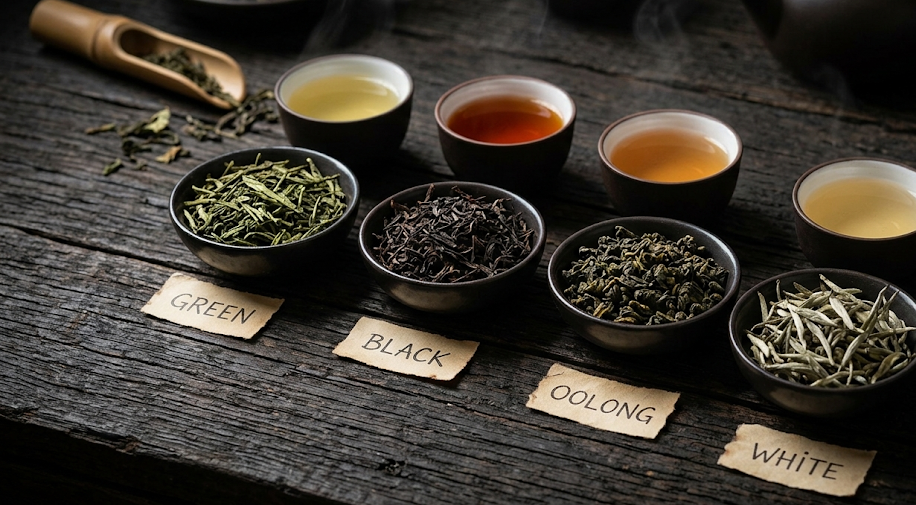
Green, Black, Oolong, and White Tea What Makes Each Type Different?

THE TEA TASTING JOURNAL   /   LEAVES & FLAVOR Four Teas, One Plant, Remarkably Different Cups Discover how oxidation, harvesting, and processing transform tea leaves into delicate white tea, refreshing green tea, layered oolong, and bold black tea. TEA ORIGINS   •   PROCESSING   •   FLAVOR   •   BREWING Walk into … Read more

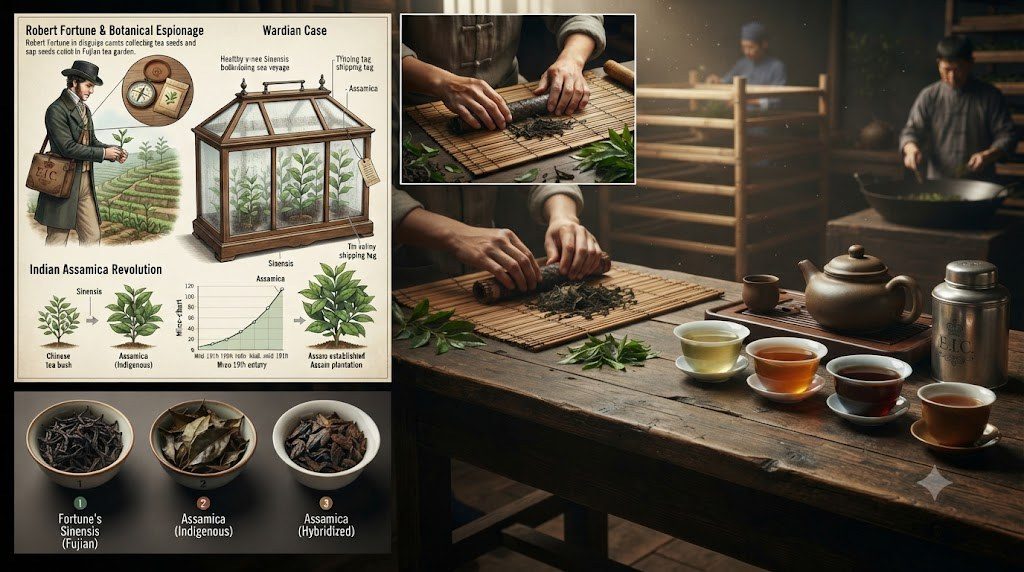
Robert Fortune & Botanical Espionage: The Wardian Case and Indian Assamica Revolution

Even after bludgeoning China into opening treaty ports, British colonial administrators recognized a fatal vulnerability: their global tea supply remained entirely dependent on the goodwill and agrarian stability of a deeply hostile Qing Empire. To achieve absolute imperial independence, the British East India Company orchestrated the most audacious and consequential industrial espionage mission in agricultural … Read more

The Maritime Tea Trade & Imperial Monopolies: East India Companies and the Opium Wars

By the seventeenth century, tea transcended its East Asian domestic borders to become the most lucrative commodity in global maritime commerce—a commercial catalyst that financed European colonial empires, sparked the American War of Independence, and precipitated the catastrophic geopolitical collapse of imperial China during the Opium Wars. Introduced to Western Europe by Dutch merchants in … Read more

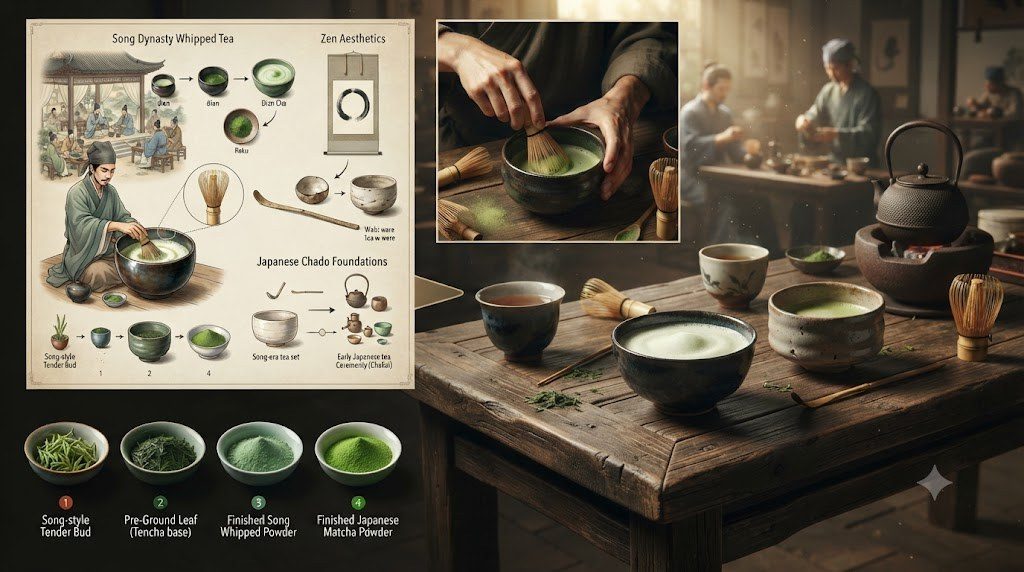
Song Dynasty Whipped Tea & Zen Aesthetics: Dian Cha Rituals and Japanese Chado Foundations

If the Tang Dynasty codified tea as an agricultural science, the Song Dynasty (960–1279 CE) elevated it into the ultimate expression of imperial aesthetic luxury and philosophical contemplation. Under the artistic patronage of the Song imperial court—most notably Emperor Huizong, an accomplished painter, calligrapher, and author of the Da Guan Cha Lun (Treatise on Tea)—tea … Read more

Ancient Origins in Southwest China: Mythic Shennong, Tang Taxonomies, and Lu Yu’s Legacy

The cultural and economic narrative of tea spans nearly five millennia, evolving from an obscure medicinal leaf gathered by indigenous tribal foragers in the sub-tropical montane rainforests of Southwest China into the world’s most widely consumed manufactured beverage after water. The journey of Camellia sinensis mirrors the rise, cultural zenith, and technological transformations of human … Read more

Ceramic Teaware Ergonomics: Yixing Zisha Porosity, Porcelain Inertia, and Thermal Dynamics

In the material science of tea appreciation, the vessel that houses the leaf is not a passive decorative container; it is an active thermodynamic and acoustic environment. The choice between Yixing purple clay (Zisha), vitrified high-fire porcelain, celadon stoneware, and borosilicate glass directly alters liquor temperature maintenance, volatile gas evaporation, and polyphenolic astringency perception. For … Read more

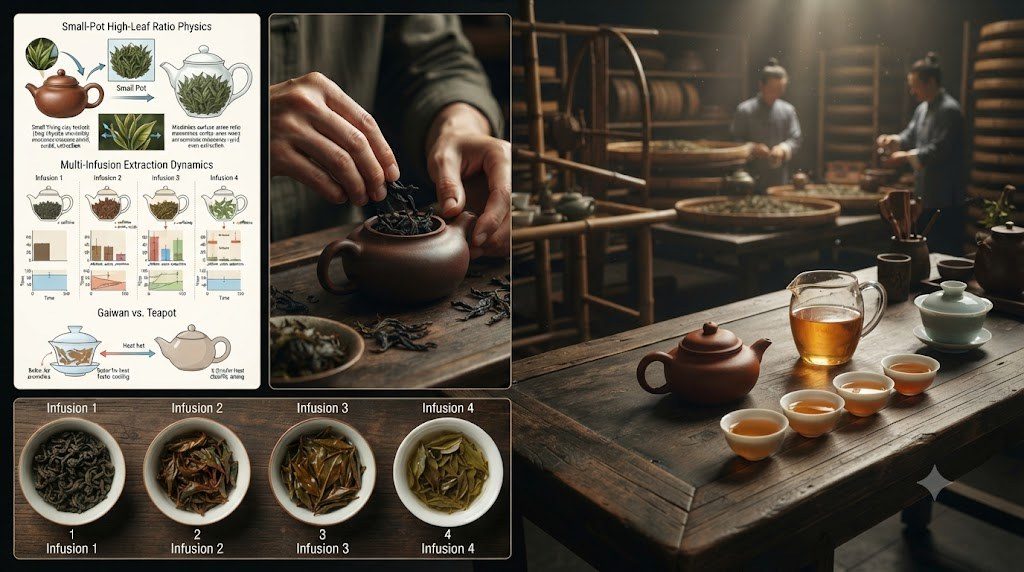
Gongfu Cha Ritual: Small-Pot High-Leaf Ratio Physics and Multi-Infusion Extraction Dynamics

Developed during the late Ming and early Qing dynasties in the Chaoshan region of Guangdong and the Wuyi Mountains of Fujian, Gongfu Cha (literally “tea brewed with skill and effort”) represents the pinnacle of empirical tea extraction science. Far from an empty theatrical ceremony, Gongfu Cha is a precision thermodynamic and hydraulic system engineered to … Read more

About Teaatlas

About Teaatlas

TeaAtlas is an authoritative technical resource providing in-depth analysis, comprehensive guides, and expert perspectives on single-origin Camellia sinensis cultivars, regional terroir science, and orthodox tea processing chemistry. We aim to equip specialists, practitioners, and enthusiasts with reliable, accurate, and actionable information.

Learn More →
Expert Research From verified industry specialists
Technical Guides Detailed workflows & analysis
Verified Quality Always updated & peer-reviewed