Thermodynamic Temperature Curves: Infusion Kinetics and Catechin Solubility Dynamics

The application of thermal energy to the extraction vessel is the primary throttle controlling the rate and selectivity of compound dissolution from tea leaf matrix to liquor. The conventional belief that “all tea must be brewed with boiling water” or conversely that “all green tea requires lukewarm water” ignores the precise thermodynamics of mass transfer … Read more
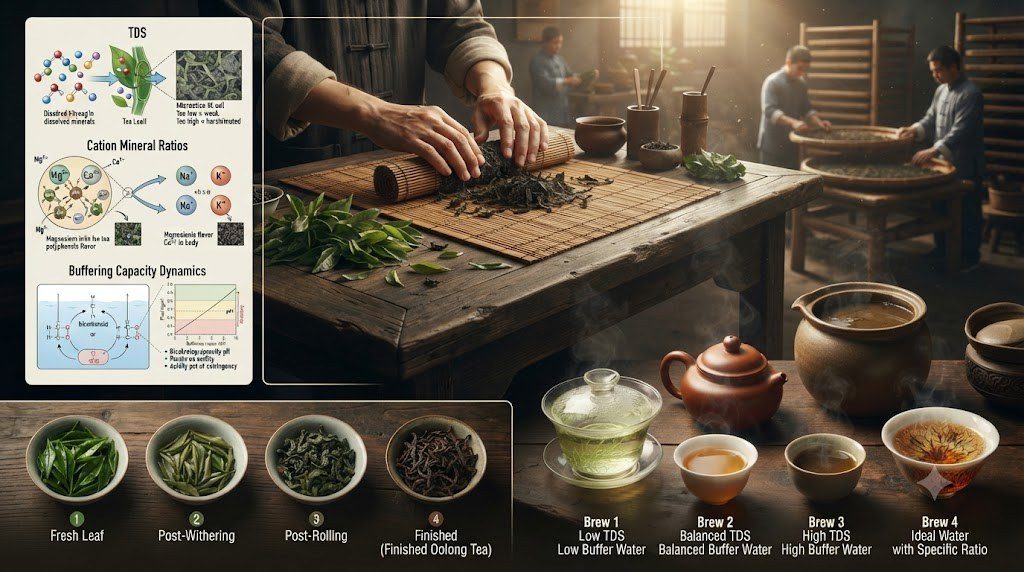
Water Chemistry & Tea Extraction: TDS, Cation Mineral Ratios, and Buffering Capacity Dynamics

Tea master and ancient philosopher Lu Yu wrote in the seminal eighth-century text Cha Jing (The Classic of Tea): “The water from slow-moving mountain springs is the best; river water is mediocre; well water is inferior.” Modern analytical chemistry confirms what imperial connoisseurs grasped empirically over a millennium ago: water is not merely an inert … Read more

Charcoal Firing & Roasting Science: Maillard Reactions, Pyrolysis, and Moisture Equilibrium

The final and decisive stage in tea manufacture is drying and roasting (Gan Zao and Kao Bei). Thermal application at this juncture serves two vital functions: it stabilizes the tea for long-term storage by reducing moisture content below critical microbiological thresholds, and it unlocks complex thermal aroma chemistry through the non-enzymatic transformation of sugars, amino … Read more

Mechanical Rolling & Bruising: Cellular Maceration, Zuo Qing, and Oxidation Triggering

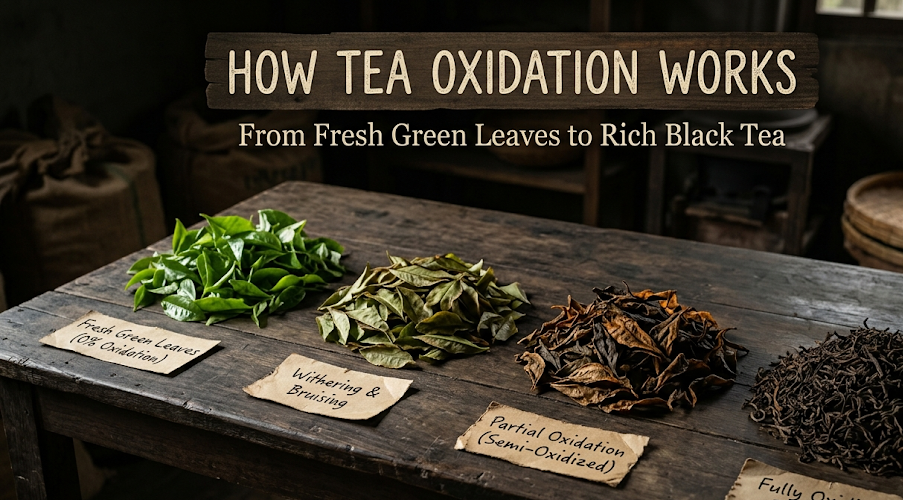
Between initial withering and final firing lies the physical crucible of tea manufacture: mechanical rolling, twisting, and bruising (Rou Nian and Zuo Qing). While withering chemically prepares the leaf and Sha Qing determines its enzymatic fate, rolling is the physical architect of extraction kinetics. It crushes cellular boundaries, forces intracellular sap to coat the outer … Read more

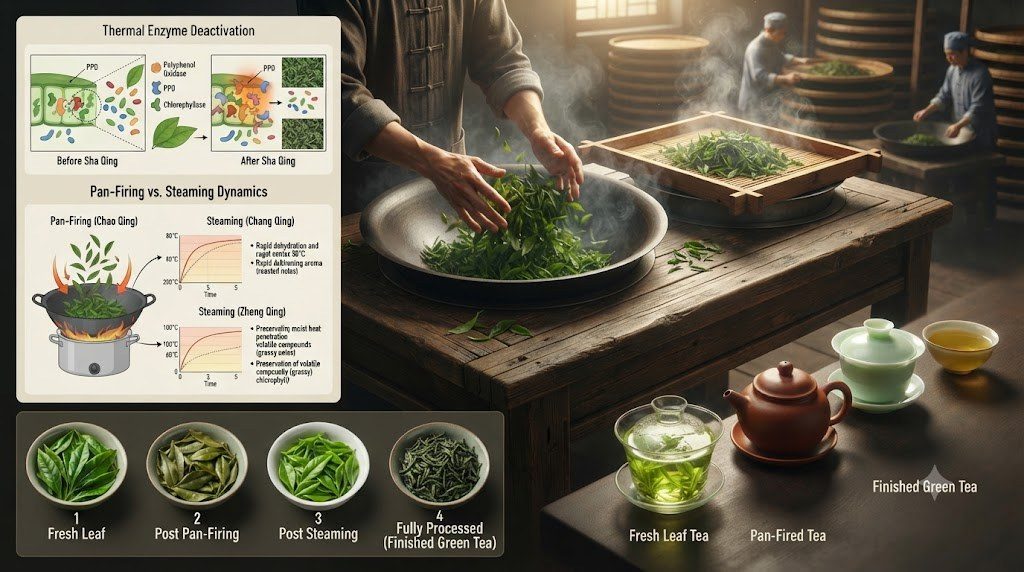
Sha Qing (Kill-Green): Thermal Enzyme Deactivation, Pan-Firing vs. Steaming Dynamics

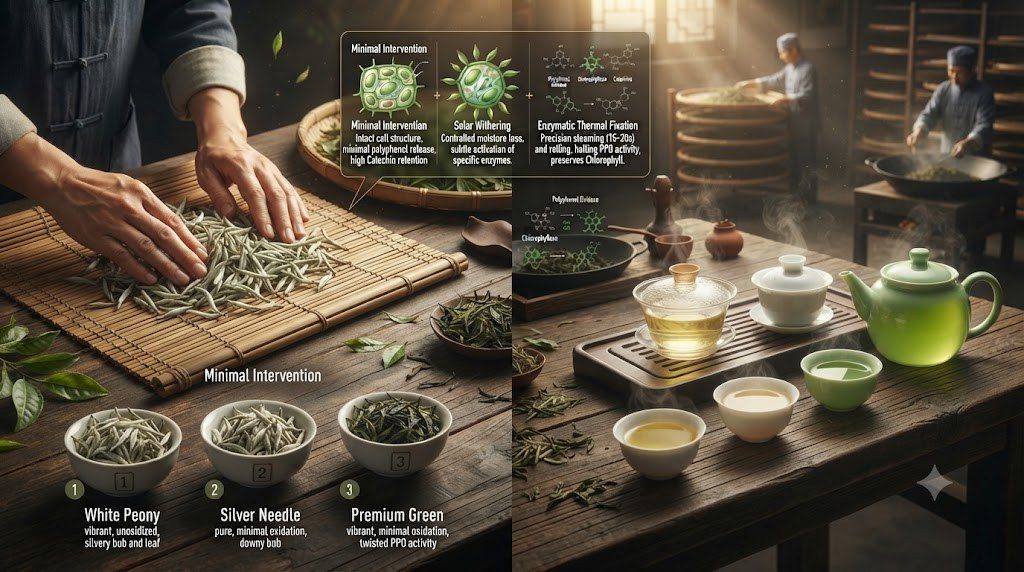
Among all thermal interventions in tea manufacturing, none carries greater structural and enzymatic finality than Sha Qing (literally “killing the green” or thermal enzymatic fixation). Applied universally to Green teas and at the exact midpoint of Oolong processing, Sha Qing represents the deliberate point of biochemical termination: the irreversible denaturation of endogenous enzymes to freeze … Read more

Withering Physics: Leaf Transpiration, Turgor Loss, and Cellular Permeability Dynamics

In the physical chemistry of tea manufacturing, the post-harvest transformation begins not with heat or mechanical cutting, but with the quiet, controlled physiological crisis of the leaf: withering (Wei Diao). Far from merely passive drying or wilted moisture evaporation, withering is an intricate biochemical and biophysical process where living leaf tissue undergoes regulated transpiration, losing … Read more

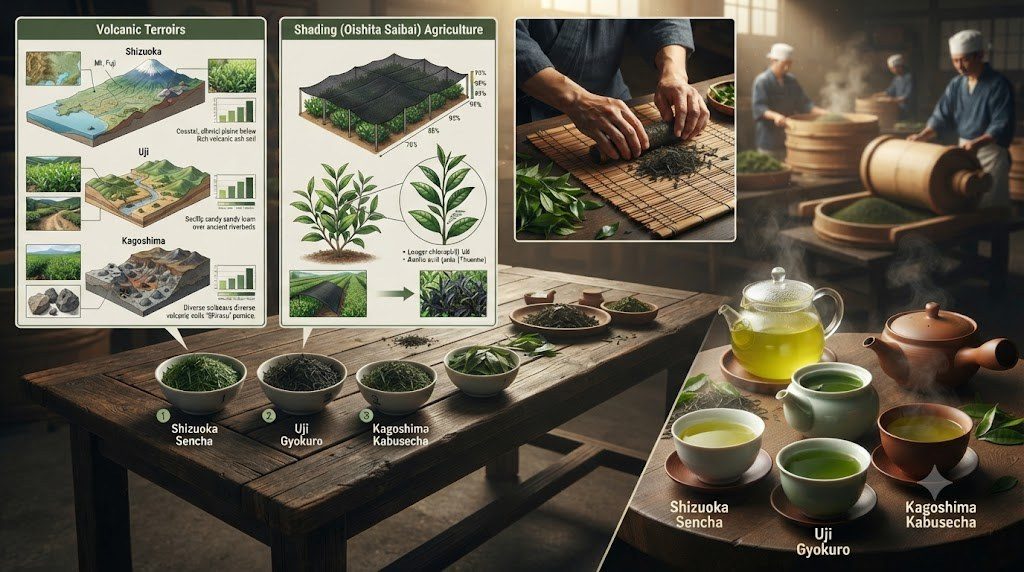
Japanese Volcanic Terroirs: Shizuoka, Uji, Kagoshima, and Shading (Oishita Saibai) Agriculture

Japan’s tea landscape represents the ultimate triumph of agricultural precision, volcanic geology, and botanical shading technology. Unlike the hand-crafted, whole-leaf orthodox traditions of China or India, Japanese green tea is an ultra-modern, high-technology agro-industrial craft. Operating on steep volcanic islands stretching from the snow-capped foothills of Mount Fuji in Shizuoka to the ancient temple valleys … Read more

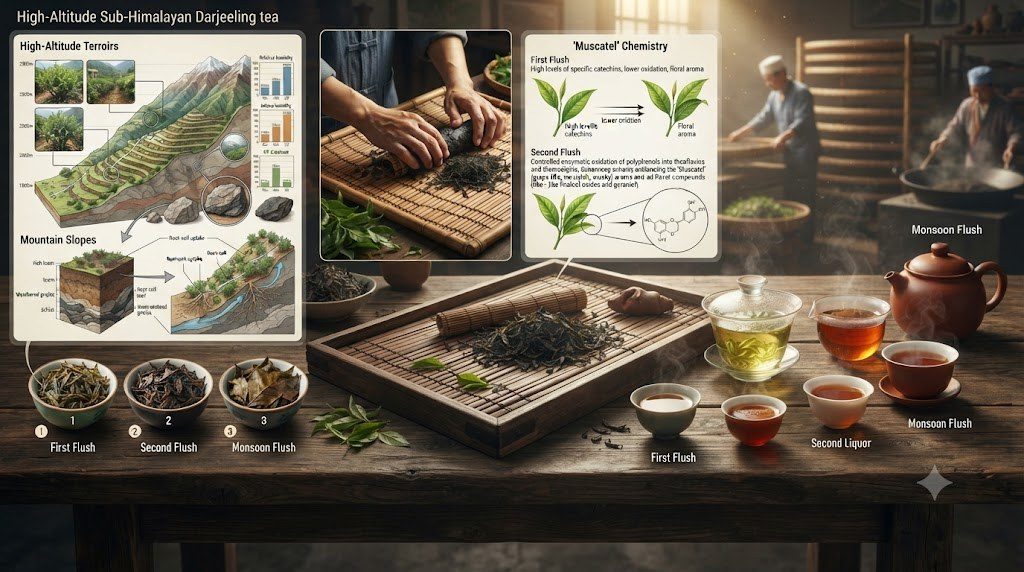
High-Altitude Sub-Himalayan Terroirs: Darjeeling Seasonal Flushes, Muscatel Chemistry, and Mountain Slopes

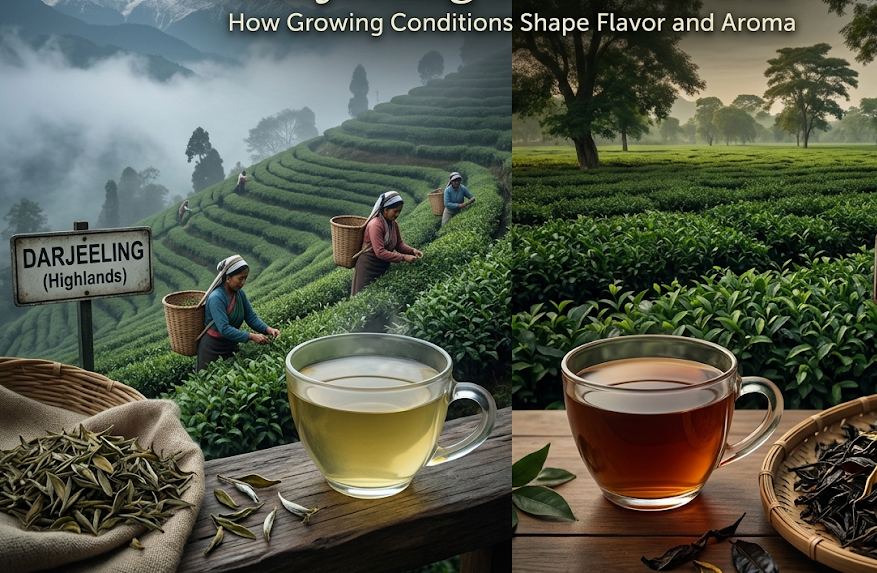
Perched high in the mist-shrouded foothills of the Lesser Himalayas in West Bengal, India, lies Darjeeling—a tea region so botanically unique and culturally celebrated that its produce is universally dubbed ‘the Champagne of Teas’. Spanning approximately 87 operational tea gardens spread across steep ridges ranging from 600 to over 2,200 meters in altitude, Darjeeling represents … Read more

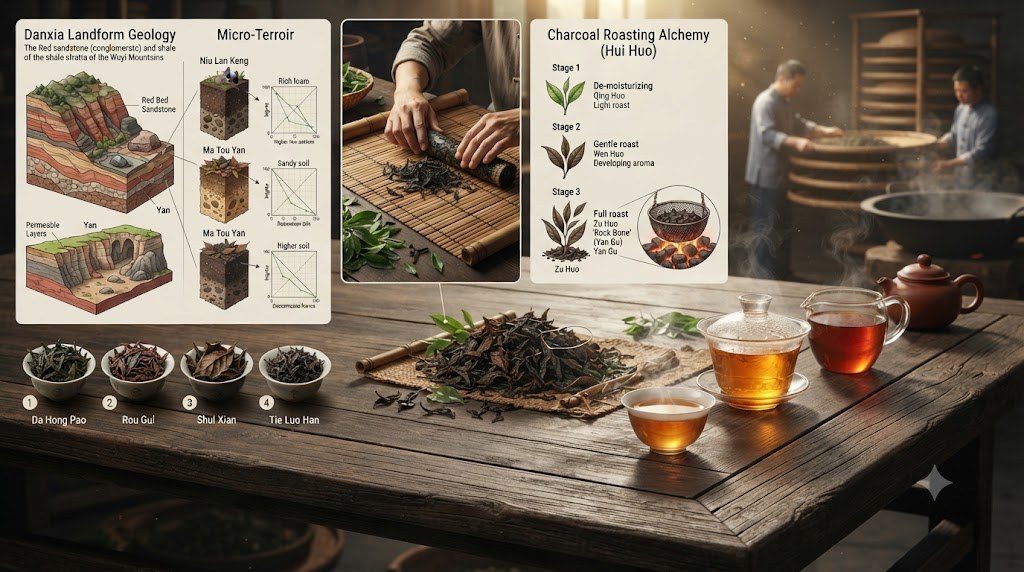
Wuyi Mountain Rock Teas (Yan Cha): Danxia Landform Geology, Micro-Terroirs, and Charcoal Roasting Alchemy

Located in northern Fujian province, the Wuyi Mountains (Wuyi Shan) represent one of the most geologically singular and culturally celebrated tea landscapes on Earth. Designated as a UNESCO World Heritage site for both cultural and natural biodiversity, Wuyi is the birthplace of both Black tea (Lapsang Souchong) and Cliff Oolong tea (Wuyi Yan Cha, or … Read more

Terroir Science & Soil Pedology: Volcanic Andisols, Weathered Granite, and Altitudinal Lapse Rates

In fine wine, the French concept of terroir encompasses the environmental triad of soil, climate, and topography that imprints a distinctive sensory signature upon an agricultural crop. In tea agronomy, terroir is equally profound—and chemically even more complex. A single cultivar of Camellia sinensis planted in the volcanic soils of Kyushu, Japan, will express radically … Read more

About Teaatlas

About Teaatlas

TeaAtlas is an authoritative technical resource providing in-depth analysis, comprehensive guides, and expert perspectives on single-origin Camellia sinensis cultivars, regional terroir science, and orthodox tea processing chemistry. We aim to equip specialists, practitioners, and enthusiasts with reliable, accurate, and actionable information.

Learn More →
Expert Research From verified industry specialists
Technical Guides Detailed workflows & analysis
Verified Quality Always updated & peer-reviewed