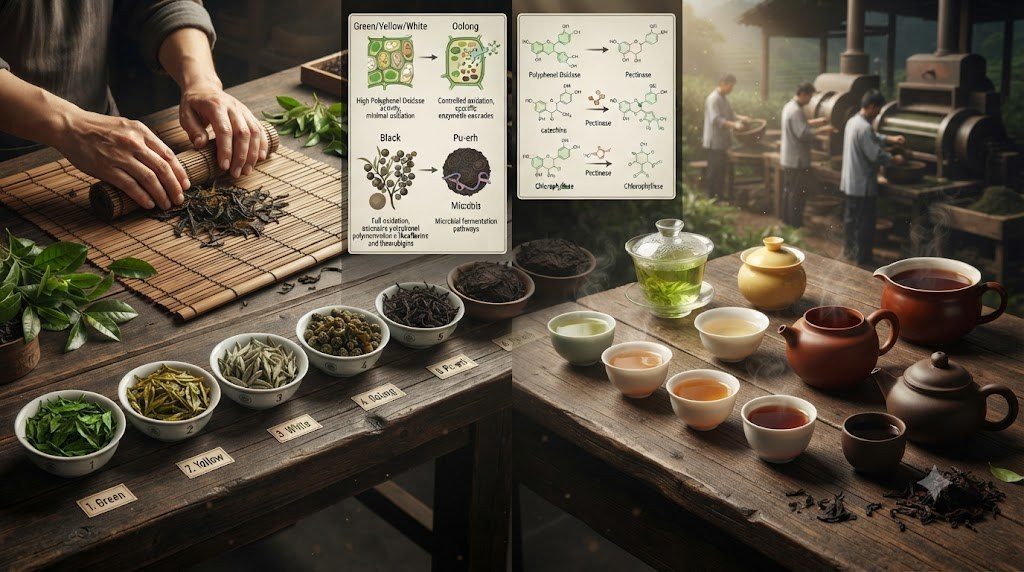
Darjeeling Tea How Growing Conditions Shape Flavor and Aroma
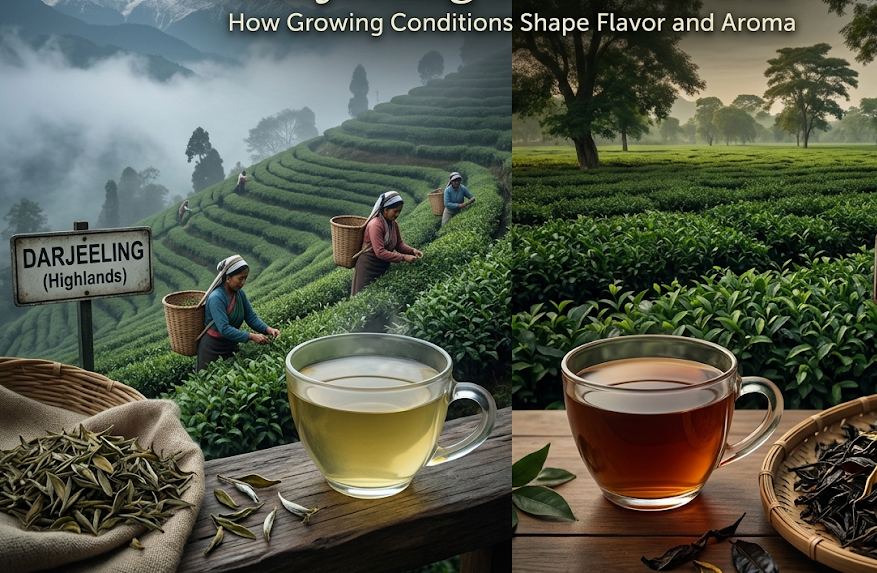
TEA TERROIR JOURNAL · ORIGIN & FLAVOR ❧ ☕ Two Tea Regions. Two Distinct Personalities. Discover why Darjeeling teas often taste delicate, floral, and complex, while Assam teas are celebrated for their rich body, malty character, and satisfying strength. DARJEELING HIGHLANDS ASSAM VALLEY TEA TASTING Two cups of black tea can look surprisingly similar while … Read more
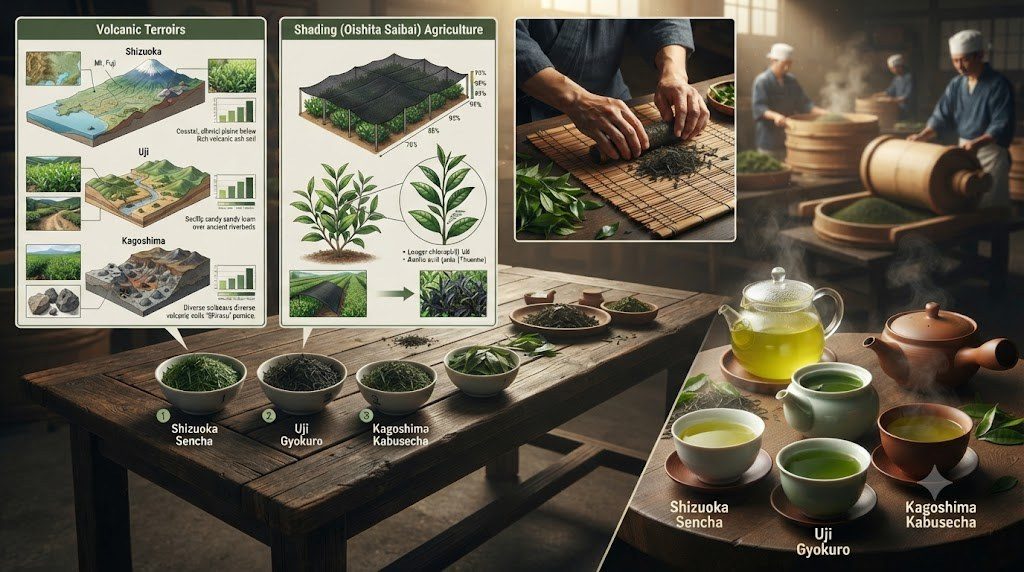
Japanese Volcanic Terroirs: Shizuoka, Uji, Kagoshima, and Shading (Oishita Saibai) Agriculture

Japan’s tea landscape represents the ultimate triumph of agricultural precision, volcanic geology, and botanical shading technology. Unlike the hand-crafted, whole-leaf orthodox traditions of China or India, Japanese green tea is an ultra-modern, high-technology agro-industrial craft. Operating on steep volcanic islands stretching from the snow-capped foothills of Mount Fuji in Shizuoka to the ancient temple valleys … Read more

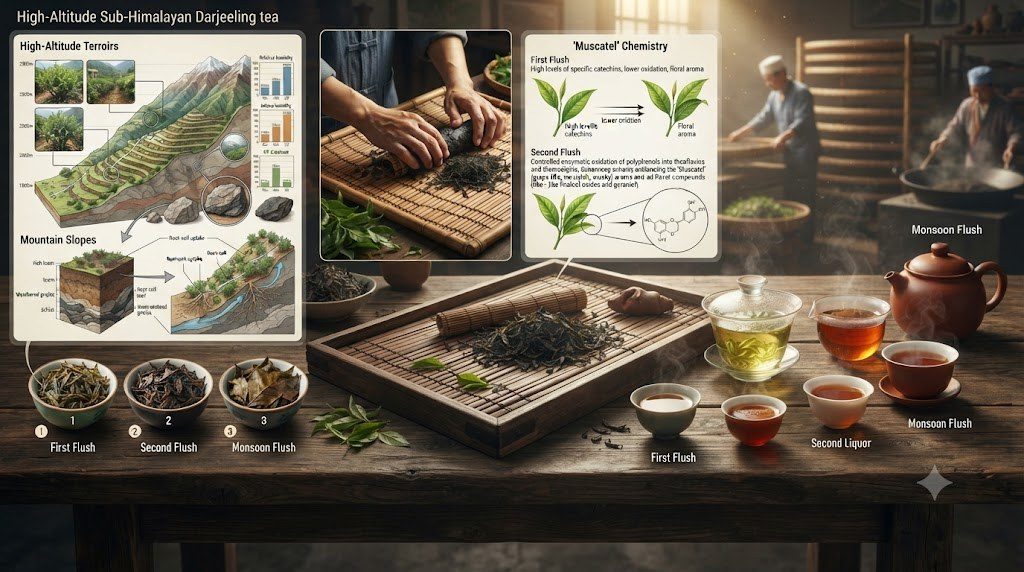
High-Altitude Sub-Himalayan Terroirs: Darjeeling Seasonal Flushes, Muscatel Chemistry, and Mountain Slopes

Perched high in the mist-shrouded foothills of the Lesser Himalayas in West Bengal, India, lies Darjeeling—a tea region so botanically unique and culturally celebrated that its produce is universally dubbed ‘the Champagne of Teas’. Spanning approximately 87 operational tea gardens spread across steep ridges ranging from 600 to over 2,200 meters in altitude, Darjeeling represents … Read more

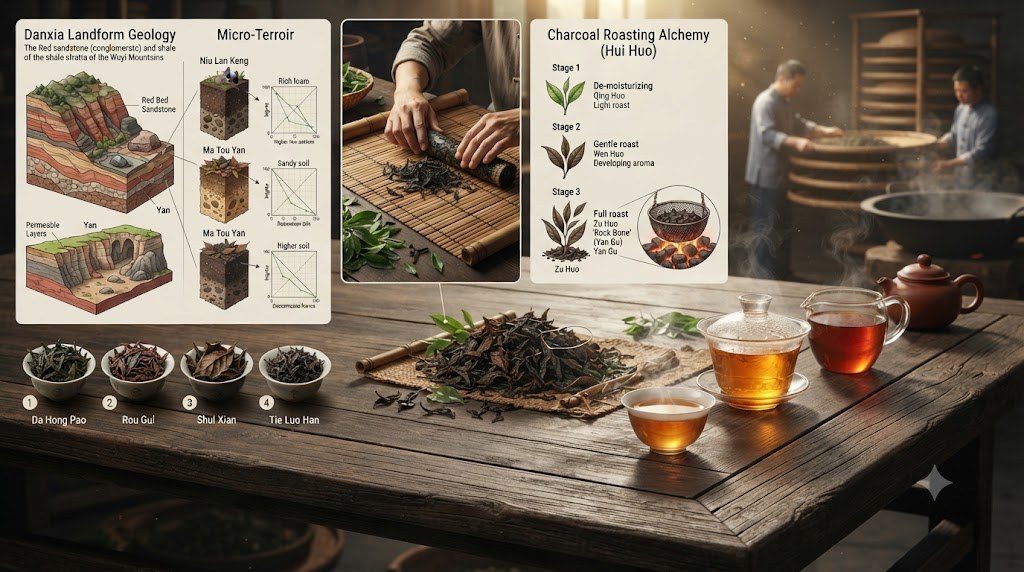
Wuyi Mountain Rock Teas (Yan Cha): Danxia Landform Geology, Micro-Terroirs, and Charcoal Roasting Alchemy

Located in northern Fujian province, the Wuyi Mountains (Wuyi Shan) represent one of the most geologically singular and culturally celebrated tea landscapes on Earth. Designated as a UNESCO World Heritage site for both cultural and natural biodiversity, Wuyi is the birthplace of both Black tea (Lapsang Souchong) and Cliff Oolong tea (Wuyi Yan Cha, or … Read more

Terroir Science & Soil Pedology: Volcanic Andisols, Weathered Granite, and Altitudinal Lapse Rates

In fine wine, the French concept of terroir encompasses the environmental triad of soil, climate, and topography that imprints a distinctive sensory signature upon an agricultural crop. In tea agronomy, terroir is equally profound—and chemically even more complex. A single cultivar of Camellia sinensis planted in the volcanic soils of Kyushu, Japan, will express radically … Read more