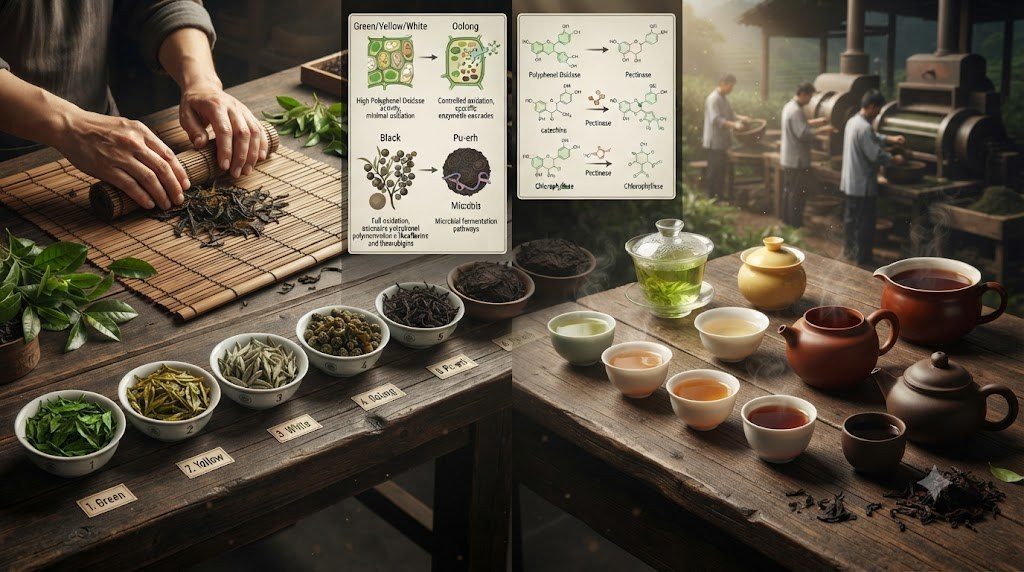
Why Your Tea Tastes Bitter How Water Temperature, Steeping Time, and Leaf Quantity Matter
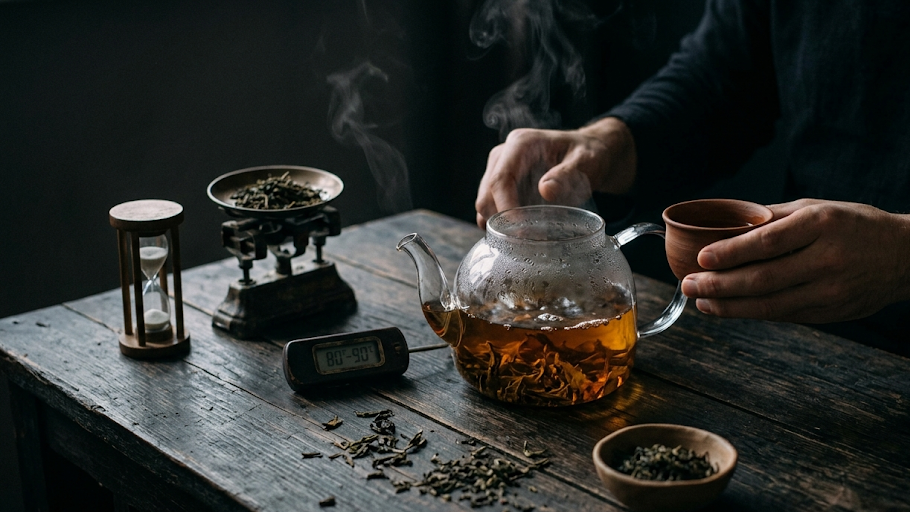
THE TEA BREWING NOTEBOOK / FLAVOR & TECHNIQUE Finding the Balance Behind a Better Cup of Tea Explore how heat, brewing time, and the amount of tea leaves influence extraction, bitterness, astringency, and the final flavor of your cup. WATER TEMPERATURE STEEPING TIME LEAF QUANTITY A cup of tea can be fragrant, smooth, refreshing, and … Read more

Ceramic Teaware Ergonomics: Yixing Zisha Porosity, Porcelain Inertia, and Thermal Dynamics

In the material science of tea appreciation, the vessel that houses the leaf is not a passive decorative container; it is an active thermodynamic and acoustic environment. The choice between Yixing purple clay (Zisha), vitrified high-fire porcelain, celadon stoneware, and borosilicate glass directly alters liquor temperature maintenance, volatile gas evaporation, and polyphenolic astringency perception. For … Read more

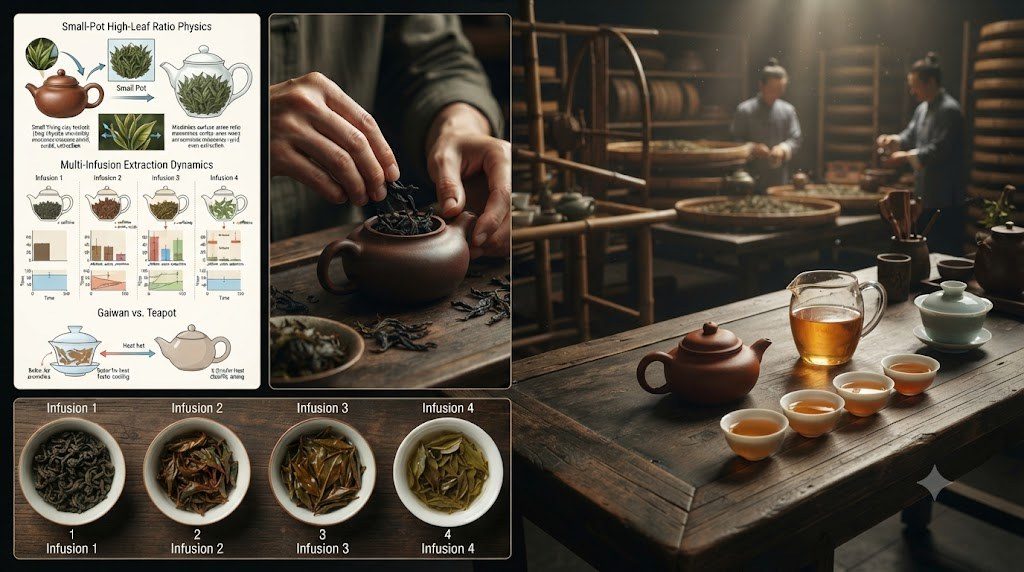
Gongfu Cha Ritual: Small-Pot High-Leaf Ratio Physics and Multi-Infusion Extraction Dynamics

Developed during the late Ming and early Qing dynasties in the Chaoshan region of Guangdong and the Wuyi Mountains of Fujian, Gongfu Cha (literally “tea brewed with skill and effort”) represents the pinnacle of empirical tea extraction science. Far from an empty theatrical ceremony, Gongfu Cha is a precision thermodynamic and hydraulic system engineered to … Read more

Thermodynamic Temperature Curves: Infusion Kinetics and Catechin Solubility Dynamics

The application of thermal energy to the extraction vessel is the primary throttle controlling the rate and selectivity of compound dissolution from tea leaf matrix to liquor. The conventional belief that “all tea must be brewed with boiling water” or conversely that “all green tea requires lukewarm water” ignores the precise thermodynamics of mass transfer … Read more

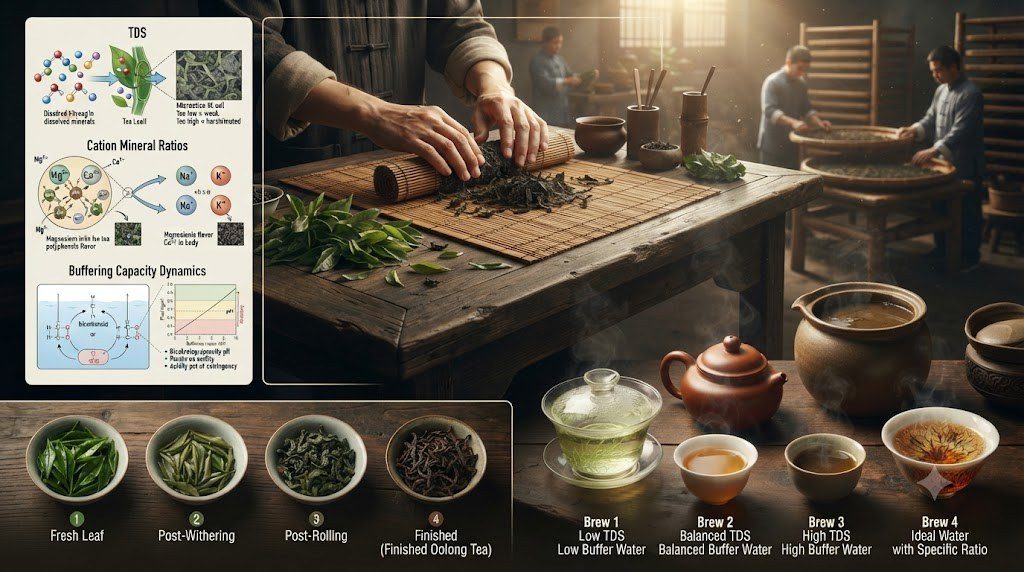
Water Chemistry & Tea Extraction: TDS, Cation Mineral Ratios, and Buffering Capacity Dynamics

Tea master and ancient philosopher Lu Yu wrote in the seminal eighth-century text Cha Jing (The Classic of Tea): “The water from slow-moving mountain springs is the best; river water is mediocre; well water is inferior.” Modern analytical chemistry confirms what imperial connoisseurs grasped empirically over a millennium ago: water is not merely an inert … Read more