Robert Fortune & Botanical Espionage: The Wardian Case and Indian Assamica Revolution
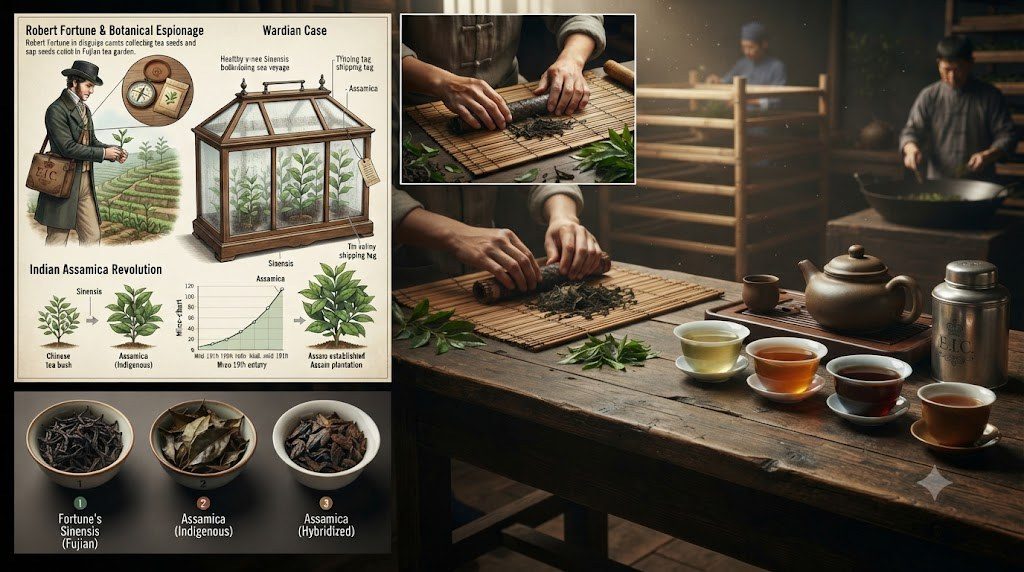
Even after bludgeoning China into opening treaty ports, British colonial administrators recognized a fatal vulnerability: their global tea supply remained entirely dependent on the goodwill and agrarian stability of a deeply hostile Qing Empire. To achieve absolute imperial independence, the British East India Company orchestrated the most audacious and consequential industrial espionage mission in agricultural … Read more

The Maritime Tea Trade & Imperial Monopolies: East India Companies and the Opium Wars

By the seventeenth century, tea transcended its East Asian domestic borders to become the most lucrative commodity in global maritime commerce—a commercial catalyst that financed European colonial empires, sparked the American War of Independence, and precipitated the catastrophic geopolitical collapse of imperial China during the Opium Wars. Introduced to Western Europe by Dutch merchants in … Read more

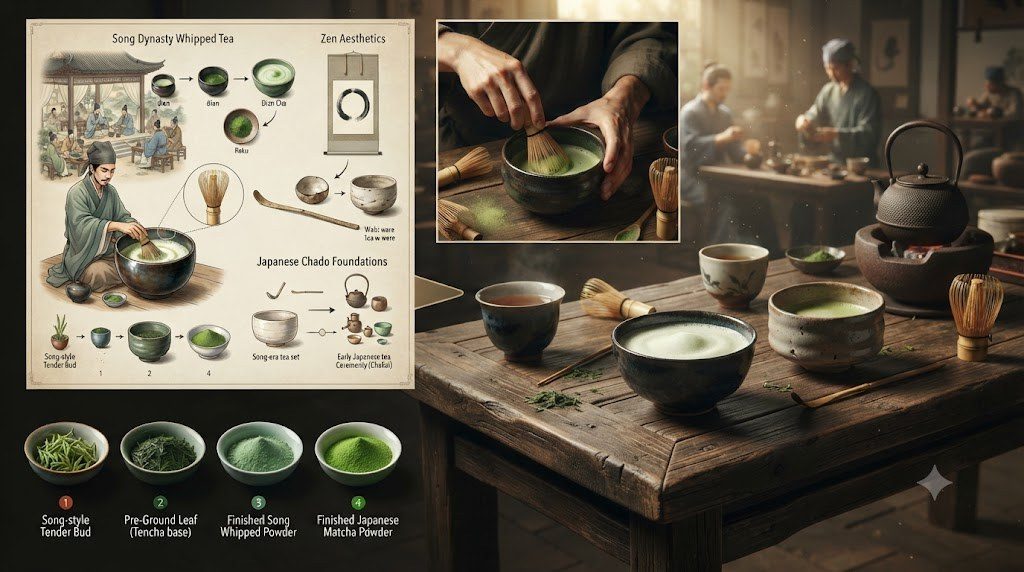
Song Dynasty Whipped Tea & Zen Aesthetics: Dian Cha Rituals and Japanese Chado Foundations

If the Tang Dynasty codified tea as an agricultural science, the Song Dynasty (960–1279 CE) elevated it into the ultimate expression of imperial aesthetic luxury and philosophical contemplation. Under the artistic patronage of the Song imperial court—most notably Emperor Huizong, an accomplished painter, calligrapher, and author of the Da Guan Cha Lun (Treatise on Tea)—tea … Read more

Ancient Origins in Southwest China: Mythic Shennong, Tang Taxonomies, and Lu Yu’s Legacy

The cultural and economic narrative of tea spans nearly five millennia, evolving from an obscure medicinal leaf gathered by indigenous tribal foragers in the sub-tropical montane rainforests of Southwest China into the world’s most widely consumed manufactured beverage after water. The journey of Camellia sinensis mirrors the rise, cultural zenith, and technological transformations of human … Read more