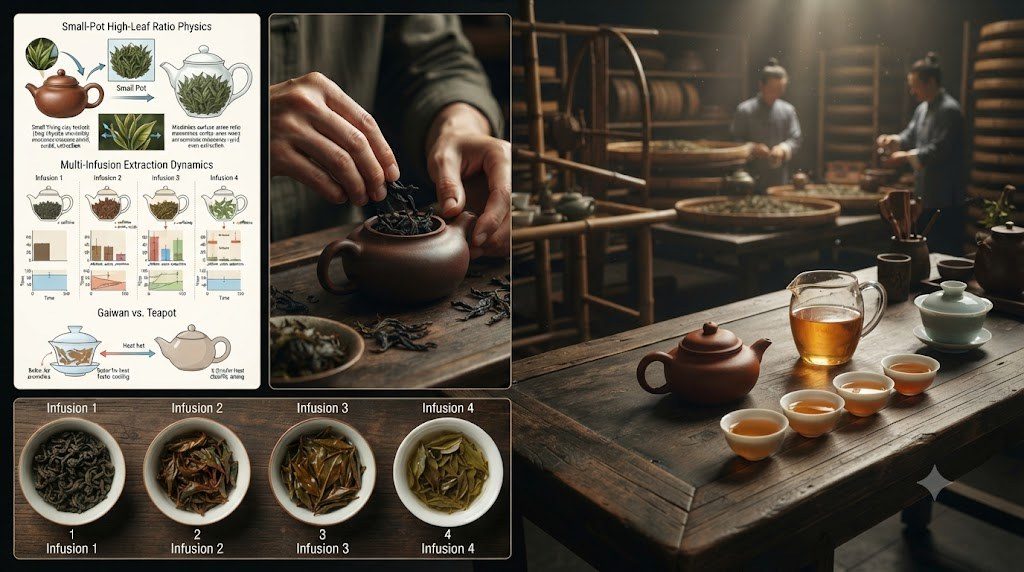
Developed during the late Ming and early Qing dynasties in the Chaoshan region of Guangdong and the Wuyi Mountains of Fujian, Gongfu Cha (literally “tea brewed with skill and effort”) represents the pinnacle of empirical tea extraction science. Far from an empty theatrical ceremony, Gongfu Cha is a precision thermodynamic and hydraulic system engineered to extract maximum volatile nuance and flavor progression from whole-leaf teas.
Western-style brewing relies on low leaf-to-water ratios (e.g., 2 to 3 grams of leaf per 350 to 500 mL of water) steeped for extended durations (3 to 5 minutes). In stark contrast, Gongfu Cha utilizes an ultra-high leaf-to-water ratio (typically 5 to 8 grams of leaf per 100 to 120 mL of water) combined with flash infusions lasting mere seconds (5 to 20 seconds initially). This inverted ratio transforms brewing from an uncontrolled chemical flood into an analytical serial chromatography.
Ratio Dynamics: Gongfu vs. Western Infusion Mechanics
The dramatic differences in physical parameters dictate entirely divergent chemical extraction kinetics:
| Extraction Parameter | Gongfu Cha Methodology | Western Teapot Methodology | Biochemical Consequence |
|---|---|---|---|
| Leaf-to-Water Ratio | 1:15 to 1:20 (e.g., 7g leaf / 110mL water) | 1:100 to 1:150 (e.g., 3g leaf / 400mL water) | Gongfu creates highly concentrated boundary layers; Western creates dilute bulk solutions. |
| Infusion Duration | Flash steeps: 5 – 25 seconds per round | Prolonged steep: 180 – 300 seconds | Flash steeps prevent over-extraction of bitter gallated catechins while maximizing volatiles. |
| Vessel Geometry | Miniature Gaiwan (100-140mL) or Yixing pot | Large ceramic/glass teapot (500-1000mL) | Small volume minimizes thermal lag and permits instantaneous liquid decanting. |
| Pouring Speed & Drain | Instant total decanting through wide rim in < 3 sec | Slow spout draining; leaves often sit in residual water | Residual water causes stewing (Men Pao), ruining leaf elasticity and freshness for later steepings. |
| Total Number of Rounds | 8 to 15+ successive progressive infusions | 1 to 2 flat steepings | Gongfu showcases sensory evolution as the leaf slowly unfurls layer by cellular layer. |
The Awakening Rinse: Wen Run Pao (Leaf Awakening Mechanics)
The Gongfu ritual begins with an initial flash rinse, termed Wen Run Pao (warming and moistening the leaf). Boiling water is poured onto tightly rolled oolong spheres or compressed pu-erh chunks and drained immediately within 3 to 5 seconds without consumption. This rinse serves three precise thermodynamic functions:
First, it pre-heats the interior vessel walls and leaf mass to target extraction temperatures. Second, it gently breaks surface tension and washes away microscopic dust particles from charcoal roasting or cellar aging. Most importantly, it hydrates outer cell walls, triggering rapid capillary water absorption that causes compressed leaf layers to untangle and unfurl, priming intracellular pores for instantaneous solute release during the subsequent first formal infusion.
Aroma Retention: The Snifter Cup and Vessel Rim Aerodynamics
In classical Chaozhou and Taiwanese Gongfu presentations, liquor is poured into tall, cylindrical aroma cups (Wen Xiang Bei) before being inverted into shallow tasting cups (Pin Ming Bei). The narrow, tall geometry of the snifter cup acts as a volatile concentrator, trapping vaporized monoterpenes and sesquiterpenes as the warm liquid vacates the ceramic walls.
As the empty vessel cools, lower-volatility floral esters and sweet lactones condense along the glaze, allowing the connoisseur to track aromatic transitions through four distinct thermal stages: hot aroma (Re Xiang), warm aroma (Wen Xiang), cold aroma (Leng Xiang), and bottom-of-cup lingering sweetness (Bei Di Xiang).
Biochemical Pathways: Polyphenol Oxidation Kinetics, HPLC Analytics, and Volatile Profiles
At the macromolecular level, the sensorial and pharmacological reality of Camellia sinensis is governed by complex biochemical reaction networks occurring during cellular senescence and thermal processing. Modern High-Performance Liquid Chromatography (HPLC) coupled with Gas Chromatography-Mass Spectrometry (GC-MS) has illuminated the precise molecular pathways responsible for astringency, umami, color depth, and volatile aromatic expression.
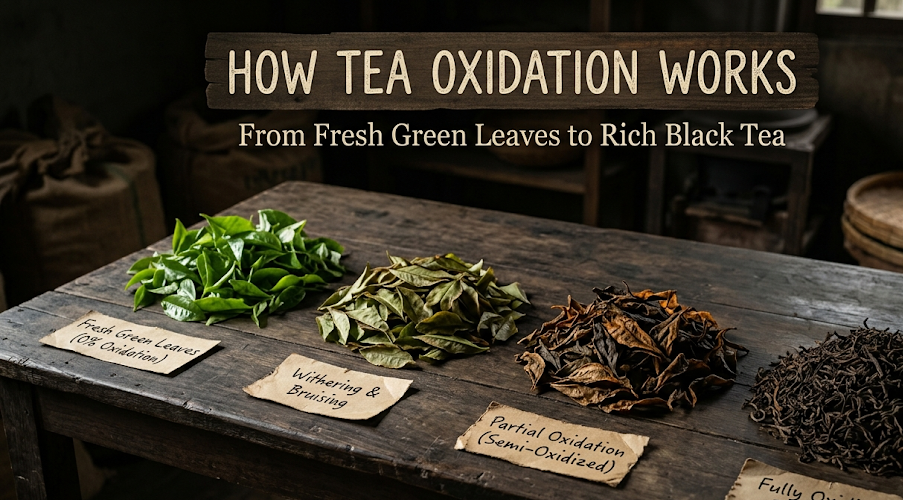
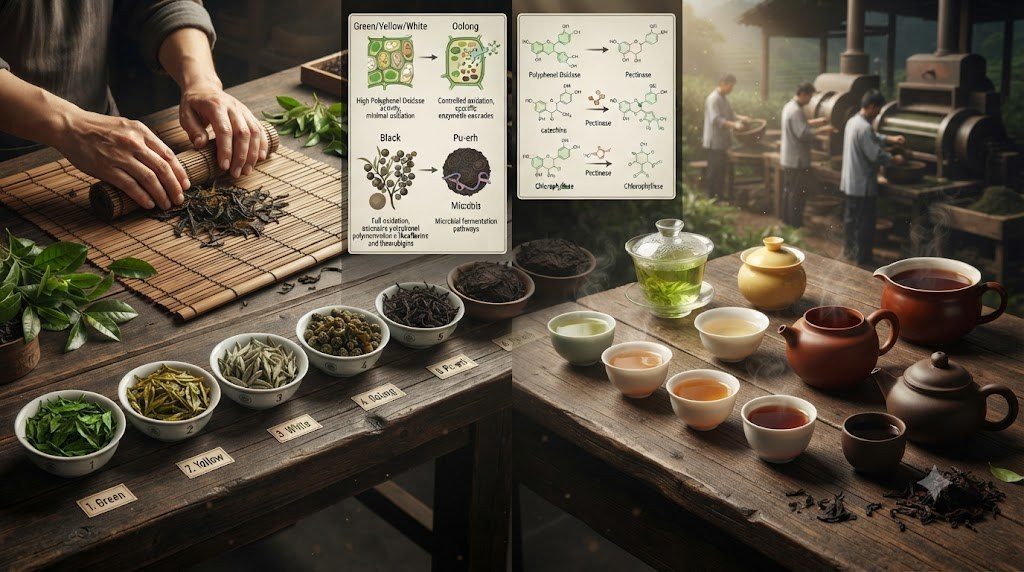
The primary reactive core resides within the flavan-3-ol family. In unprocessed fresh flushes, monomeric catechins constitute 25% to 35% of dry matter weight. Epigallocatechin gallate (EGCG) predominates (approximately 50-60% of total catechins), accompanied by epicatechin gallate (ECG), epigallocatechin (EGC), and epicatechin (EC). When cellular integrity is compromised, polyphenol oxidase (PPO, EC 1.14.18.1)—a binuclear copper metalloenzyme—catalyzes the aerobic oxidation of o-diphenols into highly reactive o-quinones.
| Analytical Metric / Fraction | Chromatographic Detection Standard | Biochemical Role in Liquor | Quantitative Typical Range (Dry Wt.) |
|---|---|---|---|
| EGCG (Epigallocatechin gallate) | HPLC at 280 nm / C18 reverse-phase | Primary antioxidant; sharp bitterness; astringent salivary protein binding. | 8.0% – 14.5% |
| L-Theanine (gamma-glutamylethylamide) | HPLC amino acid analysis / ninhydrin derivatization | Crosses blood-brain barrier; promotes alpha-wave relaxation; rich savory umami. | 1.5% – 4.2% |
| Caffeine (1,3,7-trimethylxanthine) | HPLC isocratic elution / UV detection at 272 nm | Purine alkaloid stimulant; clean bitter kick; forms theaflavin complexes. | 2.2% – 4.8% |
| Total Theaflavins (TF-1, TF-3, TF-3′, TFDG) | HPLC gradient elution / Flavognost colorimetry | Golden liquor rim; briskness index; mouthfeel clarity in black/oolong teas. | 0.5% – 2.0% |
| Volatile Monoterpene Alcohols | GC-MS with solid-phase microextraction (SPME) | Linalool, geraniol, nerolidol; floral, muscatel, and orchidaceous aromatics. | 150 – 450 ppm (total volatiles) |
Simultaneously, the enzymatic hydrolysis of non-volatile glycosidically bound volatiles (GBVs) by endogenous beta-glucosidases and beta-primeverosidases acts as a molecular release valve during leaf withering. Odorless disaccharide-bound glycosides stored within cell vacuoles are enzymatically cleaved, liberating fragrant volatile terpenes into the gaseous phase. This biochemical liberation explains why carefully withered leaves undergo an explosive aromatic metamorphosis from raw green grassy notes into intoxicating lilac, honey, and ripe peach bouquets.
Furthermore, the purine alkaloid caffeine forms reversible non-covalent hydrophobic and hydrogen-bonded complexes with theaflavins and thearubigins at temperatures below 40°C. This reversible thermodynamic aggregation is the direct physicochemical driver of “tea cream” (cream-down) in strong black tea infusions. Far from indicating defective quality, brilliant translucent tea creaming is the hallmark of high theaflavin purity and dense soluble solids.
Historical Case Studies: Terroir Lineages, Estate Archives, and Trade Chronicles
The contemporary agronomy and international connoisseurship of tea cannot be divorced from centuries of accumulated empirical trials, regional trade monopolies, and multi-generational agrarian lineages. Across the rugged river gorges of East Asia and the cloud-veiled ridges of the sub-Himalayas, specific micro-terroirs achieved legendary status through ruthless quality selection and codified processing protocols.
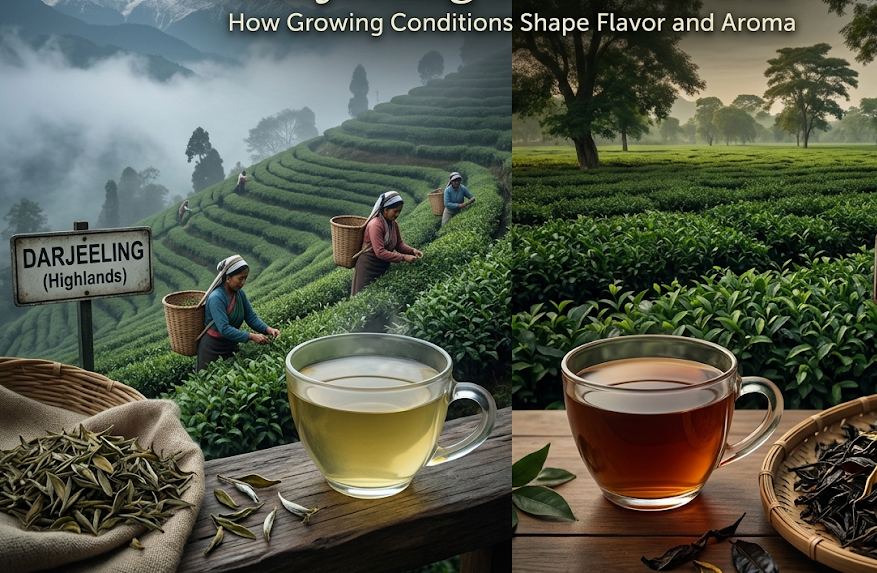
Consider the historic estate records of the Darjeeling Himalayan hills following the British East India Company’s mid-nineteenth-century clearances. Archival ledgers from landmark gardens such as Castleton, Makaibari, and Jungpana reveal that initial plantings struggled with harsh winter frosts and monsoonal soil erosion until master planters realized that high-elevation slopes (above 1,500 meters) combined with pure Chinese seed stock (Camellia sinensis var. sinensis) produced an ethereal, low-tannin flush with intense muscatel grape notes during the dry pre-monsoon spring. These early successes established the imperial Darjeeling auction benchmark at the London Royal Exchange, where single chests fetched unprecedented prices.
| Historical Terroir / Estate | Key Century / Era | Pioneering Technical Milestone | Historical Market Legacy |
|---|---|---|---|
| Beiyuan Imperial Gardens (Fujian) | Song Dynasty (10th–12th c.) | Pioneered hydraulic water-powered tea presses and micro-milled Dragon & Phoenix tribute cakes. | Established the courtly benchmark for imperial tribute tea and inspired Song Emperor Huizong’s treatise. |
| Makaibari Estate (Darjeeling) | Founded 1859 | Transitioned from colonial exploitation to pioneer of certified biodynamic and organic tea agronomy. | Produced historic record-breaking Silver Tips Imperial lots auctioned globally. |
| Wuyi Tianxin Monastery (Fujian) | Ming-Qing Era (17th c.) | First systematic refinement of partial oxidation and charcoal basket roasting (Kao Bei). | Birthplace of authentic Da Hong Pao parent bushes and the entire global Oolong category. |
| Uji Byodoin Environs (Kyoto) | Edo Period (17th–18th c.) | Nagatani Soen developed the Uji green tea hand-rolling method (Aomushi-seicha-sei) in 1738. | Replaced coarse boiled bancha with sweet, emerald sencha, sparking modern Japanese tea culture. |
| Menghai Tea Factory (Yunnan) | Established 1940 | Co-invented the accelerated microbial pile fermentation (Wo Dui) method in 1973 for ripe Pu-erh. | Created iconic vintage recipes (such as 7542 and 7572) that anchor modern pu-erh investment markets. |
Furthermore, maritime shipping logs from seventeenth- and eighteenth-century East Indiamen merchant vessels—such as the Royal Charlotte and Earl of Abergavenny—document the grueling six-month ocean journeys from Whampoa Anchorage around the Cape of Good Hope to London’s East India Docks. Tea chests were meticulously lined with hand-beaten lead sheeting and packed with dry river reeds to protect fragile leaves against humid ocean bilges and saltwater contamination. These historical preservation protocols directly spurred modern barrier packaging innovations.
The social geography of tea production also reflects profound labor transformations. From the indentured coolie labor systems of colonial Assam to the collectivized agricultural communes of mid-twentieth-century China, and finally to modern fair-trade cooperative estate ownerships, the human hands that pluck, wither, roll, and fire each shoot represent an unbroken chain of living agrarian heritage.
Sensory Evaluation Protocols: Laboratory Cupping, Analytical Refractometry, and Quality Assurance
To eliminate subjective bias and guarantee strict commercial consistency, international tea evaluation relies on rigorous standardized sensory and chemical benchmarking. The global gold standard is governed by the ISO 3103 specification (equivalent to BS 6008), which establishes reproducible thermodynamic and volumetric parameters for laboratory professional cupping across producing estates, export brokers, and research laboratories.
Under ISO 3103 protocol, exactly 2.0 grams (± 2%) of dry leaf per 100 mL of freshly boiled water are infused in a standardized porcelain tasting pot with a serrated drainage lid for exactly six minutes. The brewed liquor is decanted into an accompanying white porcelain tasting bowl, leaving the wet spent leaf (infused leaf or “outturn”) resting inverted on the upturned lid. Trained sensory panelists evaluate five distinct sensory dimensions: dry leaf morphology, liquor optical clarity, liquor aroma, liquor gustatory balance, and spent leaf elasticity.
| Sensory / Instrumental Attribute | Standardized Testing Parameter | Target High-Grade Metric | Analytical Quality Indication |
|---|---|---|---|
| ISO 3103 Infusion Ratio | 2.0g leaf per 100mL boiling distilled/soft water; 6 min steep | Standardized benchmark | Forces maximum polyphenol release to reveal underlying flaws, bitterness, and soil defects. |
| Digital Optical TDS (Refractometry) | Digital tea refractometer at 20°C temperature compensation | 0.35% – 0.75% TDS (liquor strength) | Quantifies total soluble dry matter mass transfer; verifies infusion efficiency. |
| Extraction Yield (EY%) | EY% = (Liquor Weight x TDS%) / Leaf Dry Weight | 18% – 24% Extraction Yield | Below 16% indicates under-extraction (thin, vegetal); above 25% marks astringency saturation. |
| Liquor Turbidity / Optical Hazing | Spectrophotometric transmission at 540 nm | > 92% light transmission at 60°C | High clarity signifies pristine processing; premature clouding reveals particulate dust or mineral issues. |
| Spent Leaf Tactile Elasticity | Physical finger compression of wet outturn | Supple, resilient, unburned leaf margins | Soft, elastic leaf tissue indicates gentle enzymatic fixing and skilled moisture regulation. |
Beyond optical refractometry, professional quality control incorporates gas chromatography olfactory ports (GC-O) to identify odor-active compounds responsible for prized varietal signatures or off-flavor taints. Compounds such as geosmin (musty, muddy taint from improper storage dampness) or 2,4,6-trichloroanisole (cork taint analogue from contaminated wooden packing cases) can be detected at parts-per-trillion thresholds before shipments leave origin ports.
Sensory profiling utilizes standardized Spider Web (radar) sensory graphs mapping six primary taste and aroma axes: Briskness, Floral Intensity, Sweet Umami, Bitterness, Astringency, and Lingering Throat Echo (Hui Gan). By plotting multi-infusion trajectories against these quantitative axes, blenders and master roasters create stable estate blends that withstand seasonal agricultural fluctuations.
Contemporary Frontiers: Climate Resilience, Genomic Breeding, and Neurobiology
The global tea industry currently stands at the intersection of unprecedented climatic challenges and revolutionary biological breakthroughs. From shifting monsoon rhythms in South Asia to the mapping of the complete Camellia sinensis nuclear genome and clinical investigations into human cognitive neurobiology, the scientific understanding of tea is evolving at exponential speed.
Anthropogenic climate shifts are altering altitudinal lapse rates and monsoon arrival dates across traditional tea belts. Rising ambient temperatures accelerate insect pest cycles (such as the tea green leafhopper, Jacobiasca formosana) and provoke erratic rainfall patterns that disrupt delicate spring flush flushes. In response, leading tea research institutes—such as the Tea Research Association (TRA) at Tocklai in India and the Tea Research Institute of CAAS in Hangzhou—are deploying high-throughput marker-assisted selection (MAS) and genome-wide association studies (GWAS) to breed drought-tolerant, frost-resilient, and high-polyphenol cultivars.
| Scientific Research Domain | Modern Technological Tool / Methodology | Breakthrough Finding / Innovation | Agronomic / Clinical Application |
|---|---|---|---|
| Genomic Architecture | High-coverage PacBio and Illumina whole-genome sequencing | Mapped 3.0 Gb genome of Camellia sinensis (cultivars ‘Shuchazao’ and ‘Yunkang 10’). | Identified gene duplication clusters governing terpene synthase (TPS) and catechin biosynthesis cascades. |
| Climate Adaptation Agronomy | Precision shade-net agroforestry and micro-drip fertigation | Intercropping with nitrogen-fixing leguminous trees buffers extreme thermal canopy spikes. | Maintains stable L-theanine and chlorophyll levels despite heat waves in low-elevation gardens. |
| Microbial Fermentation Metagenomics | Metatranscriptomics and HPLC-MS metabolomics | Uncovered non-toxic fungal enzyme cascades transforming tea polysaccharides into bioactive immunomodulators. | Standardizes sterile microbial inoculation for pharmaceutical-grade ripe pu-erh extracts. |
| Cognitive Neurobiology | Functional Magnetic Resonance Imaging (fMRI) & Quantitative EEG | L-Theanine crosses blood-brain barrier, synergizing with caffeine to elevate neural alpha-band waves (8-12 Hz). | Induces ‘relaxed alertness’, boosting working memory and sustained cognitive focus without jittery tachycardia. |
At the neurobiological level, the unique synergy between L-theanine (2-amino-4-(ethylcarbamoyl)butyric acid) and caffeine explains why tea induces a state of calm mental clarity distinct from coffee consumption. Caffeine acts as a non-selective antagonist of adenosine A1 and A2A receptors in the central nervous system, preventing drowsiness. Concurrently, L-theanine acts as a weak antagonist at AMPA and NMDA glutamate receptors, modulating glutamatergic neurotransmission and increasing brain concentrations of gamma-aminobutyric acid (GABA), dopamine, and serotonin.
This dual action produces a balanced neural frequency state characterized by elevated alpha waves (8–12 Hz), which are associated with relaxed alertness, creative flow states, and enhanced sensory perception. As clinical trials validate these neuroprotective and metabolic benefits, specialty tea is increasingly recognized not merely as a sensory luxury, but as an essential functional botanical for modern mental well-being.
Practical Implementation: Connoisseur Sourcing Protocols, Brewing Parameter Blueprints, and Technical FAQ
Translating theoretical tea science into exceptional daily practice requires clear operational blueprints. Whether managing a specialty tea bar, curating a private collection of aged cakes, or conducting precision home gongfu sessions, connoisseurs and professionals must adhere to systematic protocols covering cultivar authentication, storage preservation, water conditioning, and infusion timing.
The following multi-step checklist provides an objective framework for verifying leaf quality and maintaining optimal cellular integrity from purchase to final cup:
- Visual Inspection (Dry Leaf): Examine leaf uniformity, intactness of bud tips, pubescence density (Bai Hao), and color integrity. Reject lots showing uneven grayness, excessive crushed stalk dust, or unnatural artificial colorants.
- Aroma Activation (Warm Vessel Shake): Pre-heat a porcelain gaiwan or purple clay pot with boiling water, discard the water, and place dry leaves into the steaming interior. Close the lid for five seconds and gently shake. The trapped thermal vapor liberates base aromatic volatiles without extraction, revealing true terroir authenticity or hidden stale taints.
- Hydration and Expansion Monitoring: During the initial flash rinse, observe how leaves hydrate. Authentic high-mountain flushes unfurl gradually over multiple rounds; chemically treated or over-fired leaves shatter or release muddy pigment immediately.
- Long-Term Storage Control: Shield teas from oxygen, direct UV light, ambient moisture, and volatile kitchen odors. Store unoxidized Green and Yellow teas in vacuum-sealed nitrogen-flushed foil pouches at sub-zero temperatures (-18°C). Store Oolongs and Black teas at room temperature in airtight tin or double-lidded caddies. Store Pu-erh and Hei Cha in breathable, temperature-stable (20°C – 26°C), humidity-controlled (60% – 70% RH) cellars to nurture living aerobic microflora.
| Tea Classification Style | Recommended Vessel Type | Leaf-to-Water Ratio | Water Strike Temperature | Infusion Cadence (Flash Gongfu) |
|---|---|---|---|---|
| Delicate White (Silver Needle) | Glass pitcher or glazed porcelain gaiwan | 4g / 100mL (1:25) | 85°C – 90°C | 30s, 40s, 50s, 60s, 90s, 120s |
| Steamed Japanese Green (Sencha/Gyokuro) | Kyusu teapot with fine ceramic mesh | 5g / 100mL (1:20) | 60°C – 70°C (Gyokuro: 50°C) | 60s, 30s, 45s, 60s (rapid extraction) |
| Pan-Fired Chinese Green (Longjing) | Porcelain gaiwan or tall glass tumbler | 3.5g / 100mL (1:28) | 80°C – 85°C | 45s, 60s, 90s, 120s |
| Fragrant Strip Oolong (Dancong/Baozhong) | Porcelain gaiwan or Zhu Ni red clay pot | 7g / 110mL (1:16) | 98°C – 100°C (Boiling) | 10s, 15s, 20s, 25s, 35s, 50s, 70s+ |
| Charcoal Roasted Rock Oolong (Wuyi) | Zi Ni purple clay pot or thick gaiwan | 8g / 110mL (1:14) | 100°C (Rolling boil) | 15s, 20s, 25s, 35s, 50s, 70s, 90s+ |
| High-Altitude Black (Darjeeling First Flush) | Thin porcelain gaiwan or cupping set | 4g / 120mL (1:30) | 88°C – 92°C | 25s, 35s, 45s, 60s, 90s |
| Malty Full-Oxidation Black (Assam/Keemun) | Glazed stoneware or porcelain teapot | 5g / 120mL (1:24) | 95°C – 98°C | 20s, 30s, 40s, 60s, 90s |
| Aged Sheng & Shou Pu-erh Cakes | High-iron Zi Ni or Duan Ni clay pot | 8g / 110mL (1:14) | 100°C (Active rolling boil) | Flash rinse (5s), 10s, 15s, 20s, 30s, 45s, 60s, 90s+ (12+ rounds) |
Frequently Asked Technical Questions (FAQ)
Q1: Why does re-boiling water spoil the taste of fine tea?
A: Repeated or prolonged boiling depletes dissolved atmospheric gases, particularly dissolved oxygen (DO), which drops from approximately 9 mg/L at room temperature to near zero during prolonged boiling. Oxygen-depleted “flat” water dampens the aromatic volatile release and gives the tea liquor a dull, heavy mouthfeel. Always use freshly drawn, freshly heated spring water.
Q2: What causes the iridescent, oily film (‘tea scum’) on the surface of brewed tea?
A: Surface tea scum is not plant oil or chemical contamination; it is an insoluble calcium carbonate and polyphenol precipitate. When brewing water contains elevated calcium cations (Ca²⁺) and bicarbonate alkalinity, calcium reacts with oxidized polyphenolic catechins and atmospheric oxygen at the liquor surface, forming an insoluble crystalline complex. Switching to low-calcium soft water (< 30 ppm Ca²⁺) eliminates tea scum entirely.
Q3: How does the astringency of tea differ from bitterness in sensory neurobiology?
A: Bitterness is a true gustatory taste sensation detected by bitter taste receptors (TAS2Rs) on the tongue’s taste buds, triggered by caffeine, free amino acids, and monomeric catechins. Astringency is not a taste, but a tactile, trigeminal somatosensory sensation: high-molecular-weight polyphenols (such as epigallocatechin gallate and thearubigins) bind and precipitate lubricating salivary proline-rich proteins (PRPs) in the mouth, causing mucosal friction, puckering, and dryness.
Q4: Can post-fermented Pu-erh tea expire or go bad over time?
A: Under proper storage conditions (moderate humidity, adequate airflow, zero light, and absence of chemical odors), authentic post-fermented Sheng and Shou Pu-erh does not expire; rather, it undergoes living biochemical maturation. However, if relative humidity exceeds 85% without ventilation, harmful molds (such as Aspergillus flavus) can develop, rendering the tea unsafe. Properly aged pu-erh displays clean camphor, dried fruit, wood, and lotus aromas with zero sourness or mustiness.
Extraction Optimization: Hydrodynamic Modeling, Sensory Physics, and Cupping Calibration
Extracting the optimal balance of flavor, aroma, and mouthfeel from whole tea leaves is fundamentally an exercise in hydrodynamic transport and chemical equilibrium. Whether conducting an informal morning session or hosting a master gongfu tasting, the interaction between water solvent dynamics, vessel geometry, and leaf expansion dictates the sensory outcome.
When hot water hits the leaf bed, three sequential mass transfer stages occur: surface wetting and capillary wetting of internal pore channels, dissolution of highly soluble surface compounds into the boundary liquid layer, and intra-particle diffusion of deep solutes through swollen cellulosic cell walls into the bulk solution. Understanding these physical stages allows the practitioner to adjust pouring turbulence, water flow rate, and contact duration with surgical precision.
| Brewing Variable | Physical Mechanism | Sensory Impact on Cup Profile | Professional Optimization Guideline |
|---|---|---|---|
| Water Strike Height & Flow | Turbulence vs. laminar flow; gas entrainment. | High pour releases aroma immediately; low pour preserves sweet brothiness. | High pour for roasted oolongs and aged pu-erh; gentle low rim pour for green and yellow teas. |
| Vessel Wall Thickness | Thermal inertia and heat dissipation rate. | Thick walls sustain high heat for deep oxidation; thin walls dissipate heat quickly. | Use thick Yixing/stoneware for dark teas; use thin high-fire porcelain or glass for green teas. |
| Leaf Pre-Hydration Rinse | Capillary expansion of compressed leaf tissue. | Awakens compressed leaves; strips charcoal or storage dust. | Flash 5-second rinse for dense balls and cakes; skip rinse for delicate unrolled needle buds. |
| Lid Retention During Rest | Vapor condensation and thermal conservation. | Traps evaporating essential oils; prevents leaf drying between rounds. | Keep lid on between infusions for roasted oolongs; crack lid open for steamed greens to prevent stewing. |
| Decanting Speed & Completeness | Elimination of residual liquid pooling. | Leaves sitting in hot puddles continue extracting bitter gallated tannins. | Ensure complete drainage to the very last drop using a fine-mesh pitcher (Cha Hai). |
Mastering these hydrodynamic variables transforms tea brewing from guesswork into a repeatable sensory art. By tuning the physical parameters of water chemistry, temperature curves, and vessel ergonomics, tea enthusiasts unlock the full expressive potential of world-class leaves, experiencing the multi-layered chromatic complexity of every infusion.