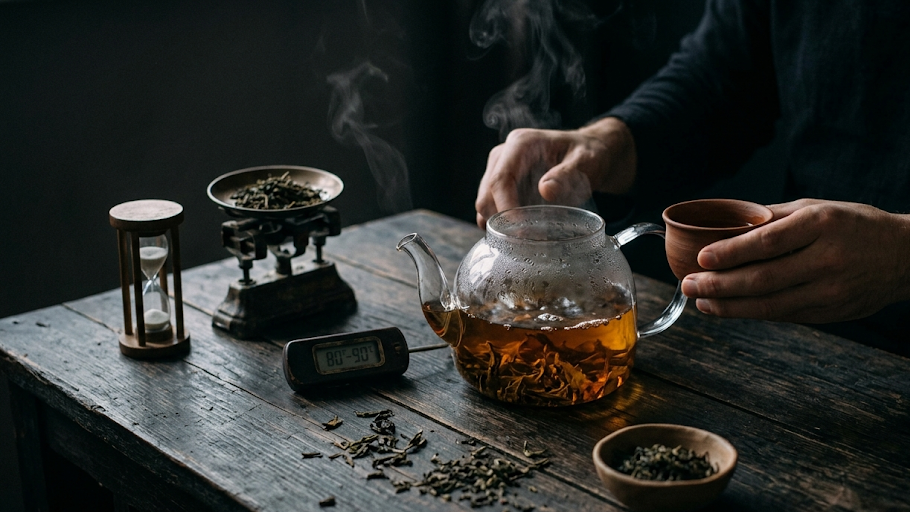
THE TEA BREWING NOTEBOOK / FLAVOR & TECHNIQUE
Finding the Balance Behind a Better Cup of Tea
Explore how heat, brewing time, and the amount of tea leaves influence extraction, bitterness, astringency, and the final flavor of your cup.
A cup of tea can be fragrant, smooth, refreshing, and naturally complex.
Yet sometimes the same tea leaves produce a drink that tastes unpleasantly bitter or leaves a dry sensation in the mouth.
This difference often comes down to how the tea was prepared.
Water temperature, steeping time, and the quantity of leaves all influence which compounds dissolve into the water.
When these factors are balanced, tea can reveal delicate aromas, gentle sweetness, and pleasant depth.
When extraction becomes excessive for the style of tea, bitterness and astringency may dominate the experience.
Understanding tea extraction makes it easier to adjust your brewing method rather than assuming the tea itself is poor quality.
With a few practical changes, you can often turn an overly strong or harsh cup into something much more enjoyable.
What Makes Tea Taste Bitter?
Tea contains a variety of naturally occurring chemical compounds.
These include caffeine, amino acids, polyphenols, aromatic substances, and other components that contribute to flavor.
Some compounds create bitterness, while others contribute sweetness, savory notes, floral aromas, or a drying sensation.
Caffeine has a bitter taste.
Certain tea polyphenols, including catechins found in green tea, can also contribute bitterness and astringency.
Astringency is different from bitterness.
Bitterness is a taste sensation, while astringency is the dry or puckering feeling that can develop in the mouth.
Both can become more noticeable when tea is brewed too strongly.
However, some bitterness and astringency are normal characteristics of particular tea styles.
The goal is not necessarily to remove them completely, but to achieve a balance that suits your preferences.
How Tea Extraction Works
When tea leaves come into contact with water, soluble compounds begin moving from the leaves into the liquid.
This process is called extraction.
Different compounds dissolve at different rates depending on temperature, time, leaf structure, and other conditions.
Some pleasant aromatic and flavor compounds become noticeable early in brewing.
Longer or hotter extraction can increase the concentration of compounds associated with stronger flavor, bitterness, and astringency.
Extraction is not a simple process in which only desirable flavors appear first and undesirable ones appear later.
Many compounds dissolve simultaneously, but their relative contributions change throughout brewing.
This is why a small adjustment in brewing conditions can noticeably change the finished cup.
BREWING PRINCIPLE / EXTRACTION BALANCE
More Extraction Does Not Always Mean Better Flavor.
Hotter water, longer steeping, and greater leaf quantity can produce a stronger drink, but strength and balance are not the same thing. A satisfying cup depends on how the extracted compounds work together.
1. Water Temperature: Why Heat Changes Flavor
Water temperature has a major influence on tea extraction.
Hotter water generally increases the speed at which many soluble compounds move from the leaves into the drink.
This can produce a stronger cup in a shorter period.
However, very hot water may also emphasize bitterness or astringency in some delicate teas.
Green teas are particularly sensitive to brewing conditions because their flavor profiles often include fresh, grassy, vegetal, or lightly sweet notes.
Using boiling water for a delicate green tea may produce a harsher result than brewing it at a lower temperature.
Many black teas, by contrast, are commonly prepared with hotter water because their processing and intended flavor profiles differ.
There is no single ideal temperature for every tea.
Leaf variety, processing method, grade, and personal preference all matter.
Practical Water Temperature Guidelines
| Tea Type | Starting Temperature | General Flavor Goal |
|---|---|---|
| Green tea | 70–85°C / 158–185°F | Preserve delicate, fresh notes |
| White tea | 75–90°C / 167–194°F | Highlight subtle aromas |
| Oolong tea | 80–95°C / 176–203°F | Balance floral, roasted, or complex notes |
| Black tea | 90–100°C / 194–212°F | Develop a fuller-bodied infusion |
| Herbal infusions | 90–100°C / 194–212°F | Extract flavors from herbs and botanicals |
These are broad starting ranges rather than strict rules.
Some Japanese green teas benefit from cooler water, while certain roasted or tightly rolled teas may be brewed hotter.
Follow the producer’s instructions when available, then adjust according to taste.
2. Steeping Time: Why Leaving Tea Too Long Can Make It Harsh
Steeping time determines how long tea leaves remain in contact with water.
As brewing continues, more soluble material generally enters the infusion.
A short steep may produce a light cup with subtle flavor.
A longer steep may increase body and intensity.
However, excessive steeping can make certain teas taste overly bitter or drying.
For example, a delicate green tea left in hot water for several minutes longer than intended may lose some of its pleasant balance.
Black tea can also become unpleasantly astringent when steeped too long for the amount of leaves and water used.
The solution is not always to reduce temperature.
Sometimes simply removing the leaves earlier produces a better result.
Suggested Steeping Times
BREWING REFERENCE / WESTERN-STYLE INFUSION
Green tea: Approximately 1–3 minutes.
White tea: Approximately 2–5 minutes.
Oolong tea: Approximately 2–5 minutes.
Black tea: Approximately 3–5 minutes.
Herbal infusions: Often 5–10 minutes, depending on the ingredients.
These ranges are starting points for relatively low leaf-to-water ratios.
Brewing methods that use more leaves and smaller amounts of water often use much shorter individual infusions.
The best steeping time depends on the tea and the brewing style.
3. Leaf Quantity: Why More Tea Is Not Always Better
The amount of tea used relative to water is another important variable.
Adding more leaves increases the amount of material available for extraction.
This can make the infusion stronger even when temperature and steeping time remain unchanged.
For everyday Western-style brewing, a practical starting point is around 2 grams of tea per 240 milliliters of water.
Some teas and brewing methods require more.
Large, loosely rolled leaves may occupy more space than finely broken leaves even when both weigh the same.
This makes weight a more consistent measurement than spoon volume.
If your tea regularly tastes too strong, reducing the leaf quantity may help.
However, a weak tea does not always require more leaves.
Sometimes a slightly longer steep or an appropriate temperature adjustment produces a better result.
How Temperature, Time, and Quantity Work Together
The three main brewing variables influence one another.
Higher water temperature may increase extraction speed.
Longer steeping gives compounds more time to dissolve.
More leaves provide a greater quantity of extractable material.
Changing one variable can therefore affect how the others should be adjusted.
For example, a brewing method using a relatively large quantity of leaves may work best with shorter steeping times.
Likewise, a delicate tea brewed with cooler water may require a slightly longer infusion to reach the desired strength.
There is no universal formula that produces the perfect cup.
The goal is to understand the relationship between these factors and make controlled adjustments.
Why Different Tea Types React Differently
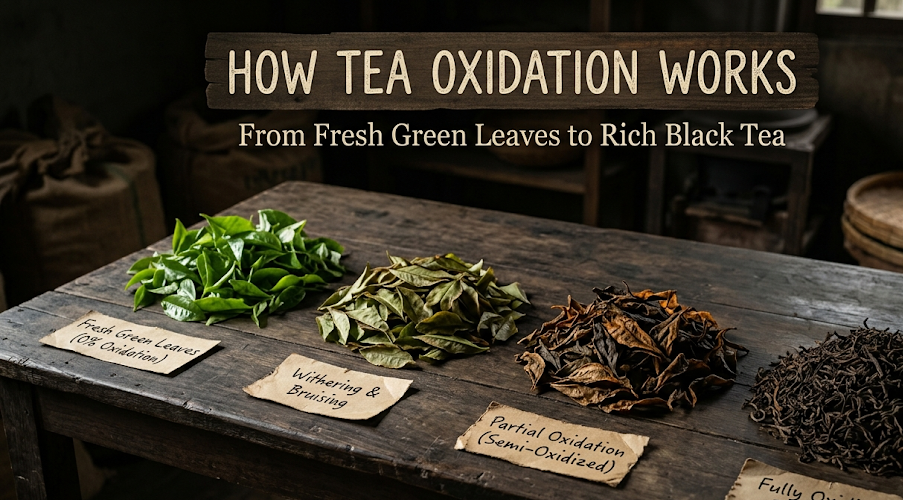
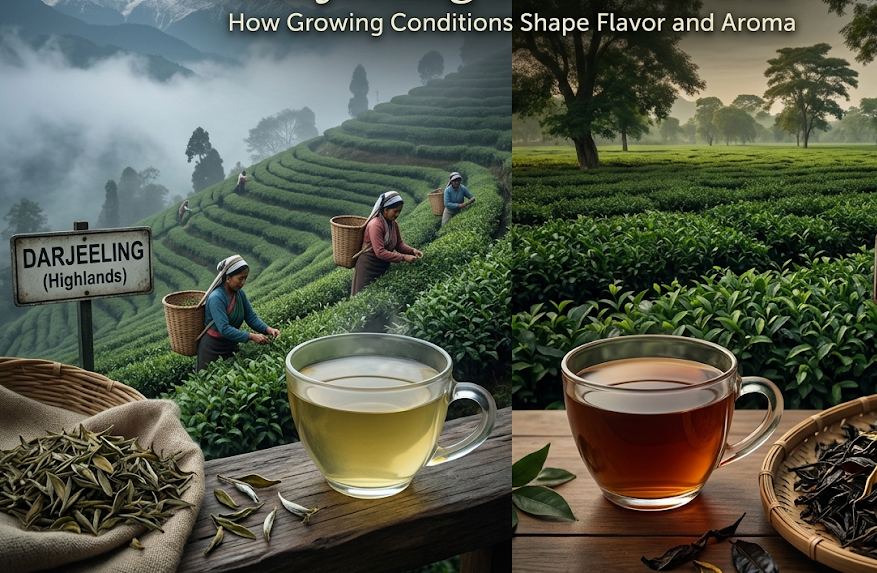
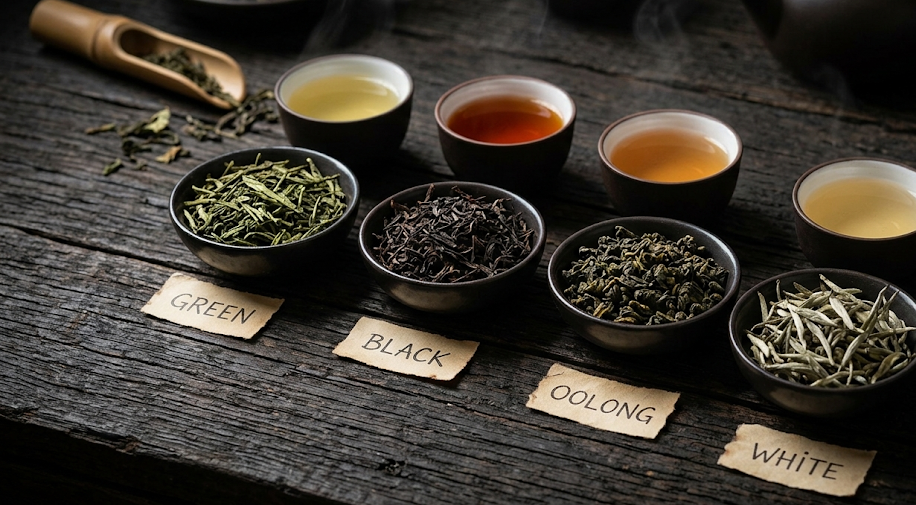
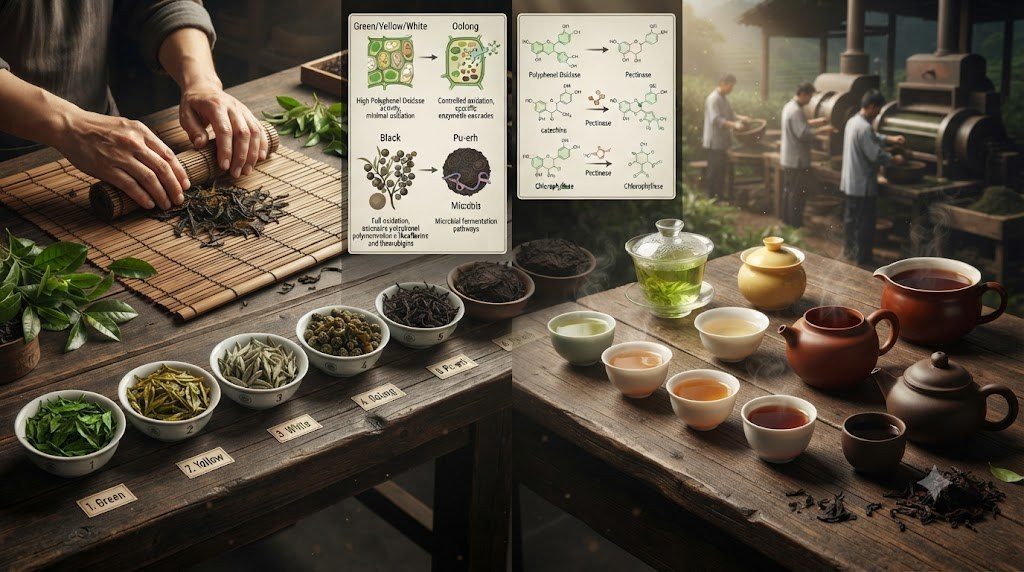
Tea styles vary because of differences in leaf material, harvesting, processing, and oxidation.
Green tea is typically heated during processing to limit enzymatic oxidation.
Black tea undergoes extensive oxidation, creating a different chemical and flavor profile.
Oolong teas fall across a broad range of processing styles.
White teas are generally processed with relatively little mechanical handling, although their characteristics vary considerably.
These differences influence how the leaves respond to brewing conditions.
Finely broken tea leaves may release compounds faster than larger intact leaves because more surface area is exposed.
Tea bags containing small leaf particles can therefore produce a strong infusion quickly.
Whole-leaf teas may require different timing, depending on their structure and processing.
Does Water Quality Affect Tea Bitterness?
Yes. Water composition can influence tea flavor.
Mineral content, hardness, and other characteristics affect how tea compounds behave during brewing.
Very hard water may change the clarity, aroma, or perceived flavor of some teas.
Highly purified water can also produce a different tasting result.
For many households, clean, pleasant-tasting drinking water is a sensible starting point.
If the water has a strong chlorine smell or unusual taste, filtering it may improve the finished tea.
However, water quality is only one part of the brewing process.
Temperature, time, and leaf quantity usually provide the easiest adjustments when troubleshooting a bitter cup.
How to Fix Tea That Tastes Too Bitter
Start by changing only one brewing variable at a time.
This makes it easier to identify what caused the improvement.
If you are brewing green tea with boiling water, try reducing the temperature.
If the tea tastes pleasant initially but becomes harsh after sitting, shorten the steeping time and remove the leaves completely.
If the drink is consistently overpowering, use slightly fewer leaves.
For a tea that tastes weak but bitter, consider whether the water is too hot or the steep is too long rather than automatically adding more leaves.
A simple brewing log can help you compare results.
Record the tea type, leaf weight, water volume, temperature, steeping time, and your impression of the flavor.
After a few attempts, you may find a combination that consistently suits your taste.
TEA TROUBLESHOOTING / QUICK ADJUSTMENTS
Try cooler water or a shorter steep.
Reduce steeping time or use fewer leaves.
Reconsider temperature and steeping time before increasing the dose.
Measure water, leaves, temperature, and time consistently.
Should You Add Milk, Sugar, or Lemon?
Adding ingredients can change how tea bitterness is perceived.
Sugar or honey adds sweetness, which may make a bitter drink seem more balanced.
Milk can soften the perceived intensity of some strong black teas and change their mouthfeel.
Lemon adds acidity and citrus flavor, which can alter the overall balance.
These additions may make a cup more enjoyable, but they do not correct the underlying brewing conditions.
If you prefer plain tea, adjusting extraction is usually the better approach.
For milk tea, a stronger brew may be intentional because the milk changes the finished drink’s flavor.
Does Reusing Tea Leaves Make Tea Bitter?
Many loose-leaf teas can be infused more than once.
During the first steep, some soluble compounds move into the water.
Later infusions extract additional compounds from the same leaves.
The flavor may change from one infusion to another.
Some teas reveal different aromatic qualities across multiple steeps.
Others become noticeably weaker.
Repeated brewing does not automatically make tea bitter.
Temperature, infusion length, leaf quantity, and the remaining extractable compounds all influence the result.
For repeated infusions, adjust steeping times according to the tea and your preferred strength.
Frequently Asked Questions
Why does my tea taste bitter?
Bitterness can result from naturally occurring compounds in tea becoming too prominent, often because of high water temperature, long steeping, or excessive leaf quantity.
Does boiling water make tea bitter?
Boiling water can make some delicate teas taste harsh, but it is appropriate for many black teas and herbal infusions.
How long should tea steep?
Steeping time depends on the tea type and brewing method. Many Western-style preparations use approximately 1–5 minutes for true tea, while herbal infusions often need longer.
Can using too many tea leaves cause bitterness?
Yes. More leaves can increase the concentration of extracted compounds and make the drink stronger or harsher.
Is bitterness the same as astringency?
No. Bitterness is a taste, while astringency is the drying or puckering sensation felt in the mouth.
Can I fix bitter tea after brewing?
You can sometimes soften the perceived bitterness by diluting the tea or adding milk or a sweetener. However, adjusting the next brew is usually more effective.
Should I measure tea by weight?
Using a small scale can improve consistency because different leaf shapes and sizes occupy different volumes.
Final Thoughts
A bitter cup of tea is often the result of an extraction balance that does not suit the tea or your preferences.
Water temperature influences how quickly compounds dissolve.
Steeping time determines how long extraction continues.
Leaf quantity affects the amount of material available to enter the water.
These three factors work together to shape the final flavor.
Different teas respond differently because their leaves, processing methods, and chemical compositions vary.
Rather than relying on one brewing method for every tea, begin with suitable guidelines and make small adjustments.
Use cooler water when delicate tea tastes harsh.
Shorten the steep when the drink becomes overly strong.
Reduce the leaf quantity when the infusion feels too concentrated.
With a little experimentation, brewing tea becomes less about guessing and more about understanding how to create the flavor you enjoy.