TEA SCIENCE / BOTANICAL PROCESSING
From Fresh Leaves to Deep Amber Tea
Explore the natural chemical reactions that transform freshly harvested tea leaves into the distinctive colors, aromas, and flavors of green, oolong, and black tea.
A cup of delicate green tea and a cup of strong black tea may look, smell, and taste completely different.
Yet both can come from the same plant: Camellia sinensis.
The difference is largely created after harvesting, when tea makers control how the leaves are handled, exposed to oxygen, and heated.
One of the most important processes is tea oxidation.
Oxidation changes the natural compounds inside tea leaves, producing new colors, aromas, and flavor characteristics.
By controlling the extent of these reactions, tea producers can create everything from fresh, grassy green teas to floral oolongs and deeply colored black teas.
What Is Tea Oxidation?
Tea oxidation is a series of chemical reactions in which compounds within tea leaves react with oxygen through the action of naturally occurring enzymes.
Fresh tea leaves contain polyphenols, including a group of compounds called catechins.
They also contain enzymes such as polyphenol oxidase and peroxidase.
In an intact leaf, cellular structures help keep many of these substances separated.
When leaves are bruised, rolled, or otherwise disrupted during processing, enzymes and polyphenols can come into greater contact.
With oxygen available, oxidation reactions begin changing the chemical composition of the leaf.
These changes influence color, taste, and aroma.
The reactions are related to the browning seen in cut apples, although tea processing involves a more complex collection of compounds and carefully controlled conditions.
BOTANICAL CHEMISTRY / THE BASIC REACTION
Leaf Compounds + Enzymes + Oxygen → New Tea Pigments and Flavor Compounds
The exact products depend on the leaf material, processing method, temperature, moisture, and oxidation conditions.
Why Fresh Tea Leaves Are Green
Fresh tea leaves contain chlorophyll, the green pigment involved in photosynthesis.
They also contain catechins and other substances that contribute to the plant’s natural taste.
When leaves are harvested, their chemical composition does not immediately become that of finished tea.
Processing determines how much oxidation occurs and which compounds remain prominent.
In green tea production, producers use heat early in the process to deactivate enzymes responsible for much of the oxidation.
This helps preserve a greener appearance and a flavor profile often described as vegetal, grassy, marine, nutty, or sweet, depending on the tea.
Green tea is therefore generally considered minimally oxidized, although some chemical changes still occur during processing and storage.
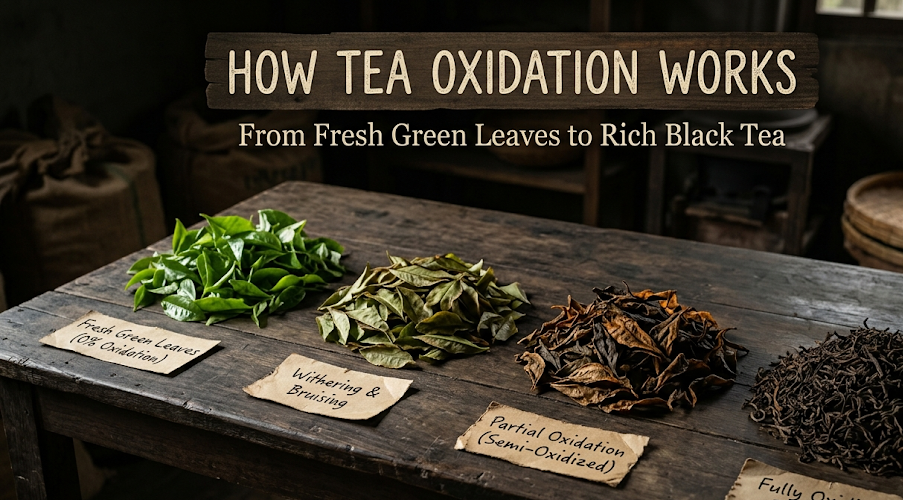
The Journey from Fresh Leaf to Black Tea
Black tea production typically involves several coordinated stages.
Each stage changes the physical condition of the leaves and influences the chemical reactions that follow.
PROCESS JOURNAL / BLACK TEA PRODUCTION
Stage 1 — Withering
Freshly harvested leaves lose some moisture and become more flexible. Chemical and physical changes during withering help prepare the leaves for later processing.
Stage 2 — Rolling or Leaf Disruption
The leaves are rolled, twisted, or mechanically processed to disrupt cells and increase contact between enzymes and their substrates.
Stage 3 — Oxidation
The processed leaves are held under suitable conditions while enzymatic reactions transform catechins and influence color and flavor development.
Stage 4 — Drying
Heat removes moisture and substantially stops enzyme activity, helping stabilize the finished tea for storage and transport.
The exact sequence, machinery, timing, and conditions vary among traditional orthodox and CTC tea-production methods.
What Happens to Catechins During Oxidation?
Catechins are important polyphenols found in fresh tea leaves.
During black tea processing, some catechins undergo enzyme-driven oxidation and subsequent reactions.
These reactions produce compounds including theaflavins and a complex mixture commonly described as thearubigins.
Theaflavins contribute to the bright reddish-orange appearance and characteristic briskness of many black teas.
Thearubigin-related compounds contribute to darker liquor color and aspects of body and flavor.
These substances are not the only contributors to tea quality, but they help explain why black tea differs so noticeably from green tea.
Oxidation also influences volatile aroma compounds, which affect how a finished tea smells.
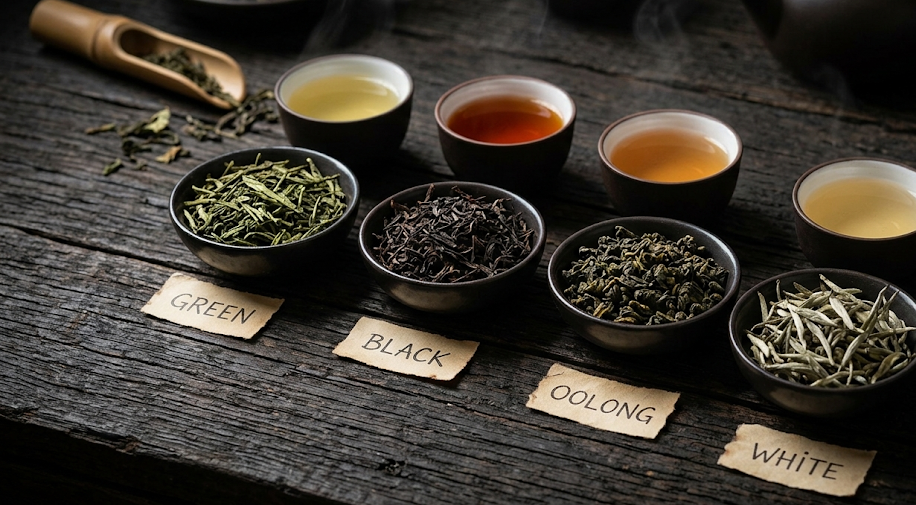
Green, Oolong, and Black Tea: What Changes?
The main tea categories differ in how producers manage oxidation and other processing steps.
| Tea Type | Oxidation Approach | Common Flavor Characteristics |
|---|---|---|
| Green Tea | Enzymatic oxidation limited early by heating | Vegetal, grassy, nutty, or fresh |
| Oolong Tea | Partially oxidized, with substantial variation | Floral, fruity, creamy, roasted, or complex |
| Black Tea | Extensively oxidized during processing | Malty, brisk, fruity, rich, or robust |
These descriptions are broad tendencies rather than fixed rules.
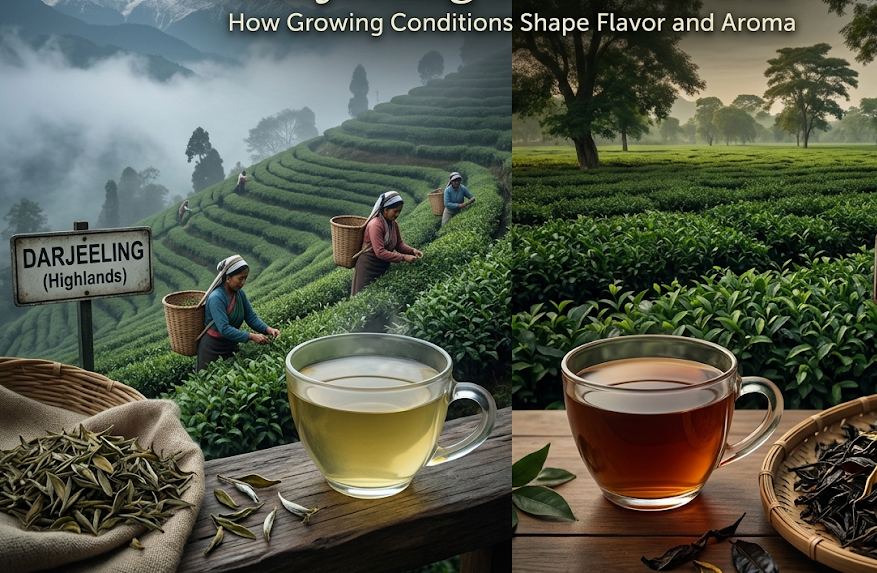
Growing conditions, cultivar, harvesting season, roasting, and brewing methods can create major differences within the same tea category.
Why Oolong Tea Has Such a Wide Range of Flavors
Oolong tea occupies a broad range between minimally oxidized green tea and extensively oxidized black tea.
Tea makers may gently bruise the leaves and allow controlled oxidation before heating them to stop further enzyme activity.
Some oolongs retain a relatively green appearance and develop floral or fresh aromas.
Others undergo greater oxidation or additional roasting, producing deeper colors and richer flavors.
The wide range of processing methods makes oolong one of the most diverse categories of tea.
Its character cannot be explained by oxidation percentage alone.
How Temperature, Moisture, and Time Affect Oxidation
Tea oxidation depends on the conditions surrounding the leaves.
Enzymes operate differently at different temperatures.
Moisture affects the physical state of the leaves and the environment in which reactions occur.
Time determines how long the reactions can continue before processing stops them.
Oxygen availability and the degree of leaf disruption also matter.
Tea producers adjust these conditions to develop a desired balance of aroma, color, and taste.
Too little oxidation may leave a black tea with an underdeveloped character.
Excessive or poorly controlled processing may reduce desirable freshness or alter flavor balance.
There is no universal ideal oxidation time because different teas require different processing conditions.
Is Tea Oxidation the Same as Fermentation?
Not exactly.
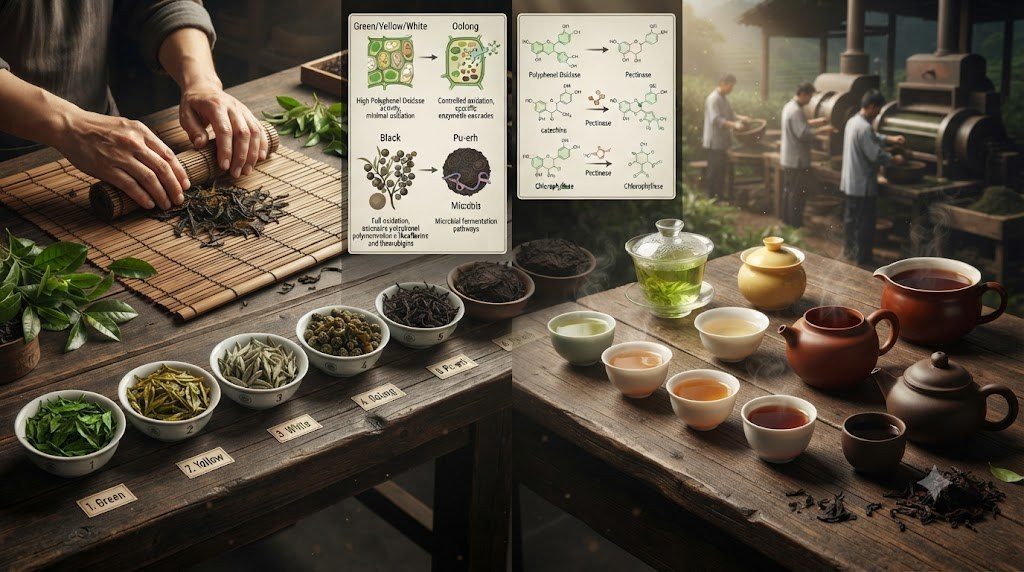
In modern scientific terminology, the main transformation involved in conventional black tea production is enzymatic oxidation.
Historically, tea producers sometimes referred to this stage as fermentation.
However, fermentation usually describes processes involving microbial activity.
Some teas, including certain post-fermented or dark teas, undergo processing in which microorganisms play an important role.
These microbial transformations are different from the primary enzymatic oxidation used to produce ordinary black tea.
Understanding the distinction helps explain why two teas can both become dark while following different chemical pathways.
Does More Oxidation Mean More Caffeine?
Oxidation level alone does not reliably determine how much caffeine a cup of tea contains.
Caffeine content depends on the tea plant material, leaf maturity, cultivar, growing conditions, processing, and brewing method.
The amount of tea used, water temperature, and steeping time also affect caffeine extraction.
Black tea is often brewed in ways that produce a strong cup, but it is incorrect to assume that every black tea contains more caffeine than every green tea.
Oxidation mainly changes other groups of compounds rather than simply creating additional caffeine.
Why Brewing Changes the Final Experience
Processing creates the chemical foundation of a tea, but brewing determines which compounds enter the cup.
Hot water extracts caffeine, polyphenols, amino acids, and aroma-related substances from the leaves.
Water temperature, steeping time, and leaf-to-water ratio influence the final taste.
Green teas may develop excessive bitterness when brewed too hot or too long, depending on the variety.
Many black teas tolerate hotter water and longer brewing, although delicate black teas can also become overly astringent.
The best preparation method depends on the specific tea rather than its color alone.
TEA TASTING / PRACTICAL OBSERVATION
Brew a green tea, a lightly oxidized oolong, and a black tea separately. Compare their dry-leaf aromas, liquor colors, and aftertastes. The differences reveal how processing shapes the final cup.
Frequently Asked Questions
What causes tea leaves to turn brown during processing?
Enzyme-driven oxidation changes natural leaf compounds and produces new pigments that contribute to darker colors.
Is black tea made from a different plant than green tea?
Both are generally produced from Camellia sinensis. Their differences arise largely from processing, although cultivars and growing conditions also matter.
Why is green tea heated early?
Heating deactivates enzymes responsible for much of the oxidation, helping preserve the tea’s characteristic composition and appearance.
Is oolong tea fully oxidized?
No. Oolong is generally partially oxidized, with processing styles ranging from relatively light to much more extensive oxidation.
Does oxidation make tea healthier?
Oxidation changes the types and proportions of tea compounds. It does not establish that one tea category is universally healthier than another.
Final Thoughts
Tea oxidation is one of the most important transformations in traditional tea processing.
When fresh leaves are disrupted, naturally occurring enzymes interact with polyphenols in the presence of oxygen.
These reactions help create the pigments, aromas, and flavors associated with different tea styles.
Green tea producers limit oxidation early, oolong makers control it to varying degrees, and black tea producers encourage more extensive oxidation before drying.
The final result also depends on leaf quality, growing conditions, temperature, moisture, and other processing choices.
What begins as a fresh green leaf can become a remarkably diverse range of beverages—all through careful control of chemistry and craft.