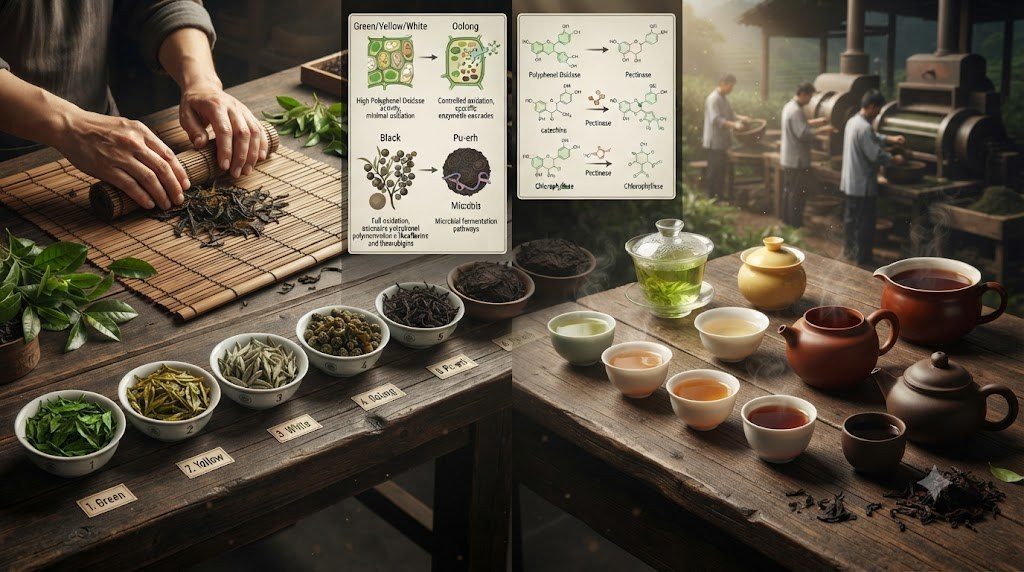
There is something quietly fascinating about the way tea changes from one cup to another. A dark amber infusion might remind you of toasted bread and caramel, while a pale golden cup carries the delicate fragrance of wildflowers. Another may taste like fresh garden vegetables, roasted chestnuts, or ripe peaches. These differences can exist even when every cup begins with leaves from the same species of plant.
Black, green, oolong, and white tea all come from Camellia sinensis. Their individual characteristics develop through differences in cultivation, harvesting, oxidation, heating, and drying. The result is an extraordinary range of flavors that extends far beyond the familiar distinction between strong and mild tea.
Black tea generally offers richness and depth, green tea emphasizes freshness, oolong explores an extensive range of floral and roasted characteristics, and white tea delivers a gentler, often naturally sweet experience. Understanding these qualities can help you select a tea that genuinely matches your preferences rather than choosing solely by its name or color.
Four Teas, Four Distinct Personalities
Black Tea
Deep, warming flavors with malty sweetness, dried fruit, cocoa, and a satisfying finish.
Green Tea
Vegetal freshness, gentle nuttiness, grassy aromas, and occasionally a savory umami character.
Oolong Tea
An expressive spectrum of orchids, honey, ripe fruit, roasted nuts, and mineral notes.
White Tea
Subtle sweetness, gentle floral fragrance, fresh hay, melon, and a smooth texture.
Why Processing Changes the Flavor of Tea
One of the most influential processes in tea production is oxidation. When tea leaves are harvested and their cellular structure is disrupted, naturally occurring enzymes interact with oxygen and transform compounds within the leaves. This changes their appearance, fragrance, and taste.
The process is comparable in principle to the browning of a freshly cut apple, although tea production involves considerably more controlled techniques. Producers influence oxidation through temperature, humidity, handling, and the timing of subsequent processing stages.
Green tea is heated relatively early to limit enzymatic oxidation. Black tea is allowed to oxidize extensively, while oolong occupies a broad range between these approaches. White tea undergoes relatively gentle processing, although natural oxidation can occur during its extended withering stage.
How Processing Styles Compare
This illustration represents general processing tendencies rather than measured oxidation percentages. Individual teas may vary considerably.
Oxidation alone does not explain every difference. Roasting introduces toasted characteristics, steaming preserves distinctive vegetal qualities, and growing conditions influence the chemical composition of fresh leaves. The combination of these factors gives each tea its recognizable identity.
Black Tea: A Rich and Familiar Experience
Black tea is often the first variety people encounter. Its substantial flavor makes it particularly suitable for breakfast blends, traditional milk tea, and comforting afternoon beverages. Depending on its origin and processing, it can be pleasantly brisk, deeply malty, fruity, or remarkably smooth.
The extensive oxidation involved in black tea production transforms many of the compounds present in fresh leaves. This contributes to the darker appearance of the dried tea and the copper, amber, or reddish-brown color of its infusion.
Flavor and Aroma
A good black tea can offer several layers of flavor. The initial sip may be brisk and warming, followed by gentle sweetness and a lingering woody or fruity finish. Certain Chinese black teas produce aromas reminiscent of honey, cocoa, and baked sweet potatoes. Indian Assam teas are especially associated with their malty character.
Common Black Tea Tasting Notes
Darjeeling offers an interesting contrast to heavier breakfast teas. Some harvests produce a lighter infusion with floral aromas and a distinctive grape-like quality often described as muscatel. This demonstrates why black tea should not automatically be considered a single strong, uniform beverage.
| Variety | Origin | Typical Character |
|---|---|---|
| Assam | India | Malty, bold, full-bodied |
| Darjeeling | India | Floral, fruity, sometimes muscatel |
| Keemun | China | Fragrant, cocoa-like, rounded |
| Ceylon | Sri Lanka | Bright, brisk, refreshing |
| Dian Hong | China | Sweet, honeyed, smooth |
Black tea is a practical choice for people who enjoy a beverage with enough body to accompany substantial meals. Stronger varieties also retain much of their identity when combined with milk.
Green Tea: Freshness With Remarkable Variety
Green tea captures qualities that are often transformed during the extensive oxidation of black tea. Its flavor can resemble fresh herbs, steamed vegetables, sweet peas, or roasted chestnuts. The overall experience is generally lighter, but that does not mean it lacks complexity.
Regional processing traditions play an important role. Many Japanese green teas are steamed, producing pronounced vegetal and marine characteristics. Chinese green teas are frequently pan-fired or heated using other dry-heat methods, which can introduce gentle toasted and nutty flavors.
The Role of Umami
One particularly interesting characteristic of certain green teas is umami, a savory taste associated with ingredients such as mushrooms, seaweed, and ripe tomatoes. Shade-grown Japanese teas, including Gyokuro, are especially valued for their rich savory sweetness.
This flavor can create a surprisingly substantial mouthfeel, even when the brewed tea appears pale and delicate.
Common Green Tea Tasting Notes
Green tea sometimes receives an unfair reputation for bitterness. Although certain varieties naturally contain a degree of bitterness, an unpleasantly harsh cup often results from excessively hot water or prolonged steeping.
Reducing the temperature and adjusting the infusion time can reveal sweetness and fragrance that might otherwise remain hidden beneath stronger bitter compounds.
For many green teas, water between 70°C and 85°C provides a useful starting point. Delicate Japanese varieties may benefit from cooler water, while some Chinese teas tolerate higher temperatures.
Popular options include Sencha for everyday freshness, Longjing for a mellow nutty character, and Gyokuro for a more concentrated savory experience. Genmaicha combines green tea with roasted rice, introducing a distinctive aroma reminiscent of toasted grains.
Oolong Tea: Where Fragrance Meets Complexity
Oolong is difficult to describe using a single flavor profile. Its production involves partial oxidation, careful handling, and, in many cases, roasting. Small changes in these techniques can produce dramatically different results.
A lightly processed Taiwanese oolong might smell like orchids and fresh cream. A darker roasted oolong from China’s Wuyi Mountains may instead evoke toasted wood, minerals, caramel, and baked fruit.
Light Oolong
Typically fresh, floral, creamy, and gently sweet. Its fragrance may resemble spring blossoms, peaches, or orchids.
Try: High Mountain Oolong or lightly processed Tieguanyin.
Dark Oolong
Often warmer and more concentrated, with roasted nuts, dried fruit, wood, caramel, and mineral characteristics.
Try: Da Hong Pao or traditionally roasted Dong Ding.
A Tea That Changes Between Infusions
Many whole-leaf oolongs are particularly rewarding when brewed several times. Rolled leaves gradually unfold, and successive infusions may emphasize different characteristics. The first cup might highlight flowers, the second fruit, and subsequent cups a softer sweetness.
This evolving experience is one reason oolong is frequently prepared using small teapots or a traditional gaiwan. Short infusions with a relatively generous quantity of leaves allow drinkers to explore its changing character.
Common Oolong Tasting Notes
Oriental Beauty is another distinctive example, often displaying honeyed and ripe-fruit characteristics. The development of its fragrance is associated partly with the interaction between tea plants and small leafhopper insects before harvesting.
For drinkers who enjoy discovering new flavors, oolong offers exceptional variety without requiring flavored additives.
White Tea: The Beauty of Subtle Flavors
White tea takes a comparatively gentle approach to processing. Freshly harvested buds and leaves are generally allowed to wither before being dried. Unlike many black and oolong teas, they typically undergo little mechanical disruption.
The finished leaves may appear silvery, pale green, brown, or a mixture of these colors. Silver Needle consists primarily of young buds, while White Peony includes buds and leaves, often creating a somewhat fuller infusion.
Flavor and Fragrance
White tea rarely delivers the immediate intensity of a strong breakfast blend. Its appeal lies in quieter characteristics that emerge gradually. A cup might suggest fresh hay, melon, pear, wildflowers, or gentle honey.
Some white teas become more expressive as the infusion cools slightly. The absence of heavy roasted flavors allows delicate fragrances to remain noticeable.
Common White Tea Tasting Notes
Silver Needle is often appreciated for its refined, bud-focused character. White Peony generally provides a more accessible balance of floral sweetness and body. Shou Mei can produce a richer, more herbal infusion, particularly when appropriately aged.
White tea is well suited to occasions when a heavy or strongly flavored beverage would feel unnecessary. It is generally best appreciated without milk or powerful flavorings that might conceal its subtleties.
Flavor Intensity Is Not the Same as Aroma
A pale tea can possess a surprisingly powerful fragrance, while a dark infusion may offer substantial body without an equally pronounced floral aroma. Color, strength, fragrance, and sweetness are separate characteristics. Evaluating them individually makes it easier to understand what you enjoy about a particular cup.
Brewing Each Tea for Its Best Flavor
Preparation can influence the drinking experience almost as much as the leaves themselves. Water temperature, steeping duration, leaf quantity, and mineral composition determine which compounds enter the infusion and how they interact.
| Tea Type | Temperature | Steeping Time | Typical Result |
|---|---|---|---|
| Black | 90–100°C | 3–5 minutes | Rich and full-bodied |
| Green | 70–85°C | 1–3 minutes | Fresh and balanced |
| Oolong | 85–95°C | 2–4 minutes | Fragrant and rounded |
| White | 75–90°C | 3–5 minutes | Soft and gently sweet |
These are suggested starting points for conventional cup or teapot brewing. Follow the supplier’s instructions when available and adjust according to the particular tea.
Start With Suitable Water
Water with a strong chlorine smell or an unusual mineral taste can interfere with delicate tea aromas. Fresh, filtered drinking water is often a practical option. Completely demineralized water, however, may produce a flat-tasting infusion.
Measure the Leaves
Approximately two to three grams of loose-leaf tea per 250 milliliters of water is a reasonable starting point for many varieties. Measuring by weight is more consistent than using teaspoons because large, fluffy leaves occupy more space than tightly rolled ones.
Adjust One Variable at a Time
If a cup tastes weak, increase the quantity of leaves slightly. If it tastes excessively bitter, try reducing the steeping time or water temperature. Changing one factor at a time helps you understand which adjustment improves the result.
Choosing Tea to Complement Your Meals
Food pairing provides another useful way to appreciate the differences between tea varieties. A successful combination allows both the beverage and the food to retain their distinctive qualities.
Black Tea Pairings
Buttered toast, breakfast sandwiches, chocolate desserts, shortbread, and rich pastries. Its substantial body complements heavier foods.
Green Tea Pairings
Steamed vegetables, rice dishes, seafood, cucumber sandwiches, and lightly seasoned meals. Its freshness provides a pleasant contrast.
Oolong Tea Pairings
Roasted almonds, grilled vegetables, mushrooms, fruit pastries, and mildly spiced dishes. Choose lighter or darker styles according to the meal.
White Tea Pairings
Fresh pears, melon, light sponge cakes, and delicate biscuits. Subtle foods allow its gentle fragrance to remain noticeable.
These combinations are suggestions rather than strict culinary rules. A roasted oolong might work beautifully with dark chocolate, while a fruity black tea could complement a light dessert. Personal preference remains the most useful guide.
Create a Simple Tea Tasting at Home
Comparing four teas side by side can reveal differences that are difficult to notice when drinking them on separate occasions. You only need a few small cups, suitable water, and samples of each variety.
Examine the Dry Leaves
Observe their color, shape, and size. Notice whether the fragrance resembles dried fruit, grass, flowers, wood, or toasted grains.
Prepare Each Tea Separately
Use suitable temperatures and steeping times for each variety. Keep the serving quantities reasonably consistent.
Observe the Infusion
Compare the colors against a white background. Notice pale gold, greenish yellow, amber, and reddish-brown tones without assuming that darker means better.
Explore the Fragrance
Allow the cups to cool enough to smell comfortably. Compare the aroma of the liquid with that of the wet leaves.
Pay Attention to Texture
Consider whether each tea feels thin, silky, creamy, brisk, or drying. Mouthfeel is an important part of the overall experience.
Record the Finish
Notice what remains after swallowing. A lingering floral fragrance, gentle sweetness, or roasted character may reveal qualities that were less obvious during the first sip.
There is no requirement to use professional tasting vocabulary. Simple descriptions such as fresh, comforting, smooth, fruity, or too bitter are perfectly useful when identifying personal preferences.
Bitterness, Astringency, and Caffeine
Bitterness and astringency are often mistaken for one another. Bitterness is a taste, while astringency describes the drying or slightly rough sensation that certain compounds create in the mouth.
A well-balanced black tea may be noticeably astringent without tasting excessively bitter. Green tea can contain a pleasant degree of bitterness alongside sweetness and vegetal freshness. Neither characteristic automatically indicates poor quality.
Caffeine is another commonly misunderstood subject. Although conventionally prepared black tea often contains more caffeine per serving than green tea, the categories overlap. Plant variety, harvested material, leaf quantity, and brewing conditions all influence caffeine content.
White tea is not necessarily low in caffeine simply because its flavor is delicate. Similarly, a dark roasted oolong is not automatically more caffeinated than a pale green tea.
Keeping Tea Fresh Between Brewing Sessions
Tea leaves can absorb surrounding odors and gradually lose their desirable fragrance when exposed to air, light, heat, and moisture. An airtight, opaque container stored in a cool, dry cupboard is a sensible solution for most everyday teas.
Avoid keeping delicate green and white teas beside coffee, strongly scented spices, or cooking ingredients. Repeated exposure to these aromas may alter the character of the leaves.
Green tea is generally best enjoyed while its fresh characteristics remain prominent. Certain white teas and roasted oolongs can develop interesting flavors through appropriate aging, but simply storing any tea for a long period does not guarantee improvement.
Buying quantities that you can comfortably consume while they remain fresh is often more rewarding than maintaining an unnecessarily large collection.
Frequently Asked Questions
Which tea has the strongest flavor?
Black tea generally provides the most familiar full-bodied flavor. However, heavily roasted oolongs can be equally intense and may offer greater aromatic complexity.
Which tea has the most floral aroma?
Lightly oxidized oolongs are particularly well known for their orchid-like and floral fragrances. Some white teas and Darjeeling black teas also possess pronounced floral characteristics.
Which tea tastes naturally sweet?
White tea and many oolong varieties offer gentle natural sweetness. Certain Chinese black teas also produce distinctive honey-like flavors without added sugar.
Can all four varieties be served cold?
Yes. Black, green, oolong, and white tea can all be prepared as iced beverages. Refrigerated cold brewing often produces a smoother flavor with less pronounced bitterness. Use clean equipment and keep cold-brewed tea refrigerated.
Is loose-leaf tea always better than tea bags?
Not necessarily. Loose-leaf tea provides more room for whole leaves to expand and can be particularly suitable for repeated infusions. However, high-quality tea bags can also produce enjoyable beverages.
Why does my green tea taste bitter?
Excessively hot water, too many leaves, or prolonged steeping can increase bitterness. Try using slightly cooler water and a shorter infusion before deciding that the variety does not suit your taste.
Which tea is suitable for beginners?
A mellow black tea, a gently roasted oolong, or a nutty Chinese green tea can provide an approachable introduction. White Peony is another good option for people who prefer delicate beverages.
Can tea be brewed more than once?
Many whole-leaf teas can produce several enjoyable infusions, particularly oolong and certain white teas. The number of worthwhile infusions depends on leaf quality, quantity, and brewing technique.
Finding a Tea That Matches Your Taste
The differences between black, green, oolong, and white tea demonstrate how a single plant can produce an extraordinary range of sensory experiences. Each variety offers something distinct rather than representing a simple progression from weak to strong.
Black tea delivers depth and comforting richness. Green tea expresses freshness and vegetal complexity. Oolong provides an expansive world of floral, fruity, and roasted characteristics, while white tea rewards attention with its delicate fragrance and gentle sweetness.
Instead of searching for one universally superior variety, explore the characteristics that make each cup enjoyable. Adjust your brewing technique, try teas from different regions, and pay attention to the flavors that naturally appeal to you.
A satisfying tea experience does not require elaborate equipment or complicated terminology. Quality leaves, suitable water, and a little curiosity are often enough to transform an ordinary cup into something worth appreciating.